


‘This book will help us on the journey of truth and reconciliation’
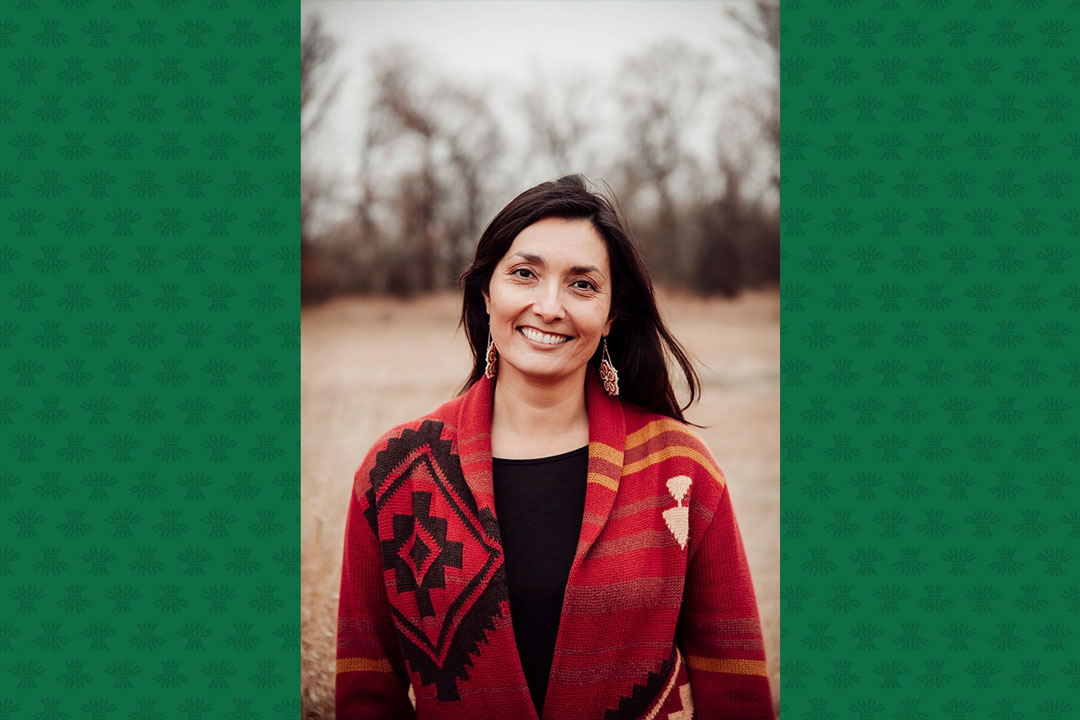
USask alumna and current graduate student Elizabeth (Liz) Zdunich (BA’01, BEd’05, CIL’19) has written kisēwātsi—Be Kind, a children’s book about her mother’s experiences at a Saskatchewan residential school
By SHANNON BOKLASCHUK“A true story of kindness and hope.”
That is how University of Saskatchewan (USask) alumna and current graduate student Elizabeth (Liz) Zdunich (BA’01, BEd’05, CIL’19) describes her first book, kisēwātsi—Be Kind. The illustrated children’s book features the lived experiences of Zdunich’s mother, Catherine, who attended a northern Saskatchewan residential school.
Zdunich is a member of the Peter Ballantyne Cree Nation and a descendant of Rock Cree and Scottish ancestry. The idea for the book came to her after she spoke at an event at a school to commemorate the National Day for Truth and Reconciliation.
“This was the story that I shared that day,” said Zdunich, who published the book under the name Elizabeth Merasty to honour her late mother, Catherine Conner, whose maiden surname was Merasty. Conner was a USask alumna who earned her Bachelor of Education degree in 1977.
Conner, who worked as a teacher in communities in northern Saskatchewan, passed away when Zdunich was 17 years old. When Zdunich was a child, Conner told her they would one day write a book together—but it was something that Zdunich didn’t believe at the time. However, years later, when Zdunich eventually decided to write the children’s book, she said a prayer and asked her mother for guidance. It soon felt like they were authoring the book together, said Zdunich.
“This story came so quickly. It was like I just could barely type it out.”
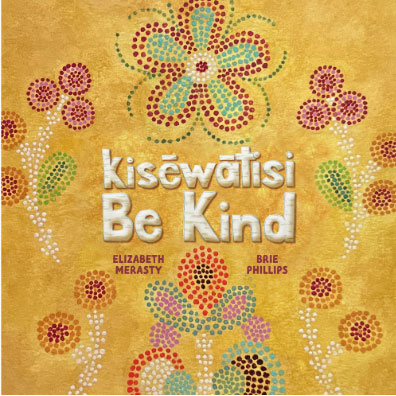
Zdunich’s new book, which was illustrated by her friend, Brie Phillips, was released in December 2025 by Your Nickel’s Worth Publishing in Regina. As a certified teacher who enjoys the adventure of learning and revitalizing Cree language and culture, Zdunich decided to feature both Cree and English text in kisēwātsi—Be Kind. The story is presented in Cree on one side of the page and in English on the other, and the back of the book features historical family photos. The book also includes two colouring pages for children and classroom resources for teachers.
“This book will help us on the journey of truth and reconciliation. It is a way for parents and teachers to approach a difficult topic with gentleness,” Zdunich said.
The book talks about the kindness that the main character, Catherine, showed to her peers despite the hardships that she faced at the residential school. Zdunich said her mother’s kindness was still remembered decades later by some of the other students who attended the school, whom she would sometimes run into in the community as an adult.
“My mom told me this beautiful story about how when she was a child in residential school, she would share her care packages—so her and her sisters would share their care packages with the other girls in the dorm,” Zdunich recalled.
“She said, ‘Well, if they asked me for a stamp, if I didn’t give them the stamp they couldn’t send a letter home to their family. So of course I had to give them the stamp, right?’ That just really struck a chord with me—to know that things that you do actually reverberate and, decades later, somebody is still so lifted up by that kindness. So, I think it’s just such a nice message for everybody to know that what you do does matter, and it actually impacts other people throughout time, not only just in that moment.”
Zdunich followed in her mother’s footsteps and became an educator. She has worked in the Sun West School Division as an Indigenous perspectives learning consultant as well as with the Saskatchewan Distance Learning Centre. Zdunich specializes in Indigenous perspectives and Treaty education implementation in the classroom, and she enjoys guiding schools as they collaboratively write land acknowledgements in a meaningful way.
Zdunich was pleased to have the opportunity to work with another Indigenous perspectives learning consultant—the book’s illustrator, Brie Phillips—on kisēwātsi—Be Kind. Phillips drew inspiration from some of the beadwork created by Zdunich’s family members while illustrating the book. Zdunich appreciated how Phillips illustrated the book’s pictures in a bubble image, with a hide pictured in the background on each page.
“The point of the hide is that hide is very strong, but it’s also very soft and gentle, and so we thought that the hide was a great metaphor for holding difficult topics,” Zdunich said.
While kisēwātsi—Be Kind is Zdunich’s first book, she comes from a long line of storytellers. Her grandmother, Marie Merasty, was an herbalist and a traditional Cree storyteller who published a book titled The World of Wetiko: Tales from the Woodland Cree. Zdunich’s late uncle, Joseph Auguste (Augie) Merasty, wrote the national bestseller The Education of Augie Merasty: A Residential School Memoir, with USask Professor Emeritus Dr. David Carpenter (DLit’18). As well, Zdunich’s cousin and a fellow USask alumna, Francine Merasty (JD’16, BA’02), is a published poet.
Zdunich said her university education was beneficial to her as she wrote kisēwātsi—Be Kind. She earned a Bachelor of Arts (honours) degree in English in USask’s College of Arts and Science in 2001, followed by a Bachelor of Education degree in USask’s College of Education in 2005, and a Certificate in Indigenous Languages in 2019.
“My honours degree in English helped with the writing of the book. My education degree helped with developing the extension activities for classroom use at the back of the book. And the Certificate in Indigenous Languages gave me the confidence to publish the story as a bilingual, with Cree and English text,” she said.
Zdunich is currently a member of the Office of the Treaty Commissioner’s speakers’ bureau and a full-time graduate student in USask’s School of Environment and Sustainability (SENS), where she is working on a Master of Environment and Sustainability degree. Inspired by the strong women in her family lineage, she has continued to learn about traditional uses of medicinal plants and seeks to learn from the land.
“It’s been kind of an ongoing fascination for me,” said Zdunich, who plans to write her master’s degree thesis about how to teach children and youth about traditional Cree and Métis plants and the impact that that learning could have on them.
Zdunich grew up living in communities in northern Saskatchewan and currently lives on a grain farm in the Kenaston, Sask., area with her husband, three children, and a herd of bison. She has given a copy of kisēwātsi—Be Kind to each of her three children—ages 8, 10, and 12—and to her nephews, with messages about their kôhkom (grandmother), who inspired the book. While the children never had the opportunity to meet their grandmother, Zdunich wants to ensure that they know what a wonderful person she was, and that she is still there for them.
"I told them, ‘We know our ancestors are with us. And so, you need to know that kôhkom is there and she is only ever a prayer away. The grandmothers and grandfathers can help us.’"
Zdunich said she felt a rollercoaster of emotions and an unexpected sense of vulnerability when her book was initially released, noting “it was like I had put a piece of my heart out into the world, and now everybody can see my heart.” Still, she is pleased that the book is widely available, including in bookstores and in classrooms in Saskatchewan, and she has ideas for future books.
Zdunich encourages other people to find the courage to share a heartfelt story, like she did.
“I think that that’s worthwhile, right? And I feel like that now every time I share it, I’m so happy I did this because it’s making this positive impact.”