


Planning for global health and sustainability
USask graduate Kelley Moore (BA’00, MA’13) travels the world to help create safe and sustainable communities
By Chris PutnamThe Regional and Urban Planning Program at the University of Saskatchewan (USask) doesn’t have a class on the protocols for dining with the King.
As a planning student, it wasn’t something Kelley Moore (BA’00, MA’13) expected she would need to know. But 26 years later, during a span of just a few months, Moore spoke at the World Urban Forum in Azerbaijan, addressed a meeting at the United Nations in New York, and—yes—was hosted by King Charles III at a reception and dinner in Scotland.
It’s all part of a summer’s work for someone with a career devoted to tackling global problems. For Moore, who has become one of Canada’s most prominent planning professionals, it started with her studies at USask.
“I couldn't have picked a better profession. When I thought about my career, I wanted to do international development, I wanted to do political science, I wanted to do peace studies and diplomacy and, in some ways, try to leave things a little better. This is the only career I can think of that lets you do all that,” she said.
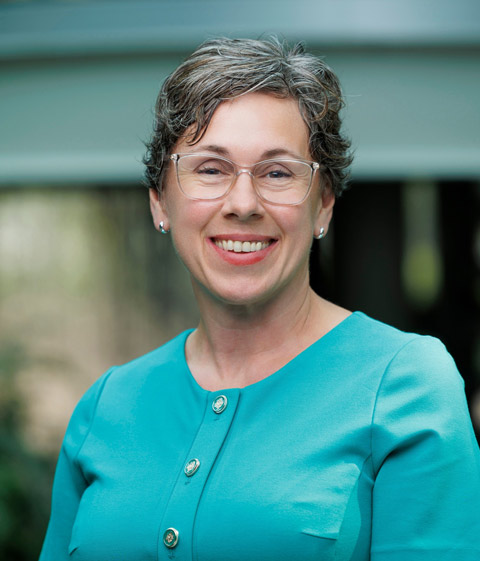
Moore’s day job is vice president, research and technology park operations at Innovation Saskatchewan, while her recent international engagements have been part of her volunteer work as secretary general of the Commonwealth Association of Planners (CAP).
Representing more than 40,000 planners from 30 countries, CAP advances the planning profession, builds planning capacity, shares knowledge and informs international policy.
Global policy may not seem like an obvious application for the planning skillset, which is best known for working on deeply local issues: roads, housing, water, sanitation, schools, sidewalks. But Moore, who followed up her undergraduate planning degree with a USask master’s degree in interdisciplinary studies, realized early on that local and global have a common foundation.
“Your building materials might be different, your population might be different, your cultures might be different, but the needs are the same,” she said. “We're all people first, no matter where we are. And we can learn from each other.”
In surveys conducted over the last eight years, CAP found that the regions in the Commonwealth undergoing the most rapid growth are also the regions with the fewest built environment professionals—specialists such as planners, architects and engineers. Without planning frameworks, fast-growing urban areas will face long-term health, mobility and environmental challenges.
One of CAP’s responses to this problem was a partnership with the King’s Foundation—and later with other Commonwealth partners—to create the Rapid Planning Toolkit. The toolkit is a practical resource that helps expanding cities quickly create plans for walkable, sustainable neighbourhoods.
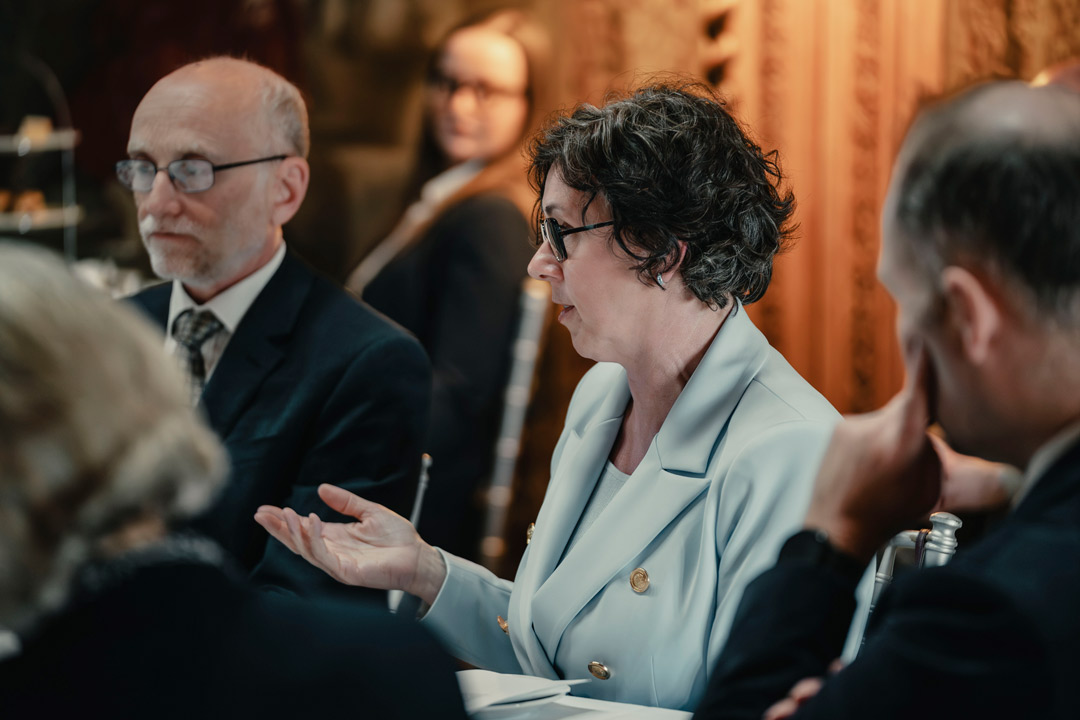
In late April, Moore was scheduled to attend workshops with the partners at Dumfries House in Scotland, headquarters of the King’s Foundation. A week before she was set to leave, she learned that the King—the foundation’s royal founding president—would host the guests in person.
Moore needed to rewrite her packing list and get a crash course in royal etiquette.
So what are some of the protocols a USask grad needs to know for their next dinner with the King?
First, you need a gown. “And you can’t just buy any gown,” noted Moore.
Luckily, a downtown Saskatoon fashion store had exactly the right modest, formal gown she needed.
Second: when you sit down for dinner, keep your eyes on the King.
“He's at the middle of the table, and whichever direction he turns, that's the direction you're going to turn and you're going to talk to that person. And the reason is so that everybody has somebody to talk to. So that was very interesting,” Moore said.
Moore met the King at a reception before dinner.
“We were chatting and he was very interested in the project,” she said. “He's very well briefed on what we're doing and the partnership, and he made a point of saying, ‘I want to see action from this.’”
The Rapid Planning Toolkit has been building momentum since its creation, with several successful pilot projects completed or underway. At the April meeting, the partners launched a new collaboration with quantum technology company FormationQ that will use quantum computing to help local governments fill data gaps and support finding the best use of space in growing towns and cities.
The toolkit is being applied this year in Belize and Zambia to support sustainable urbanization. It’s exciting to see the group’s work deliver tangible results, said Moore.
“It's one thing to be forming policy, and that's important, but what you really want is to be on the ground serving community. And now this last year, that's what this has turned into.”
For Moore—a Fellow of the Canadian Institute of Planners who was appointed CAP’s first female secretary general five years ago—service takes many forms and the work never stops.
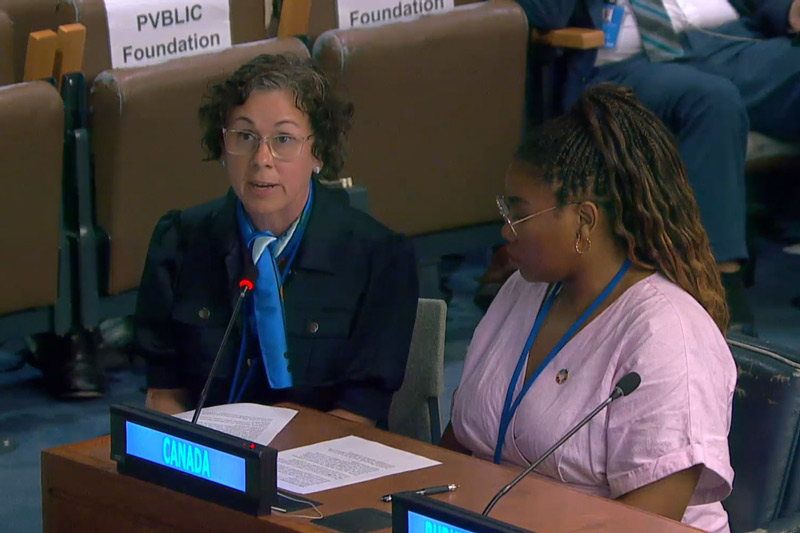
In May, she represented CAP at the World Urban Forum, speaking and moderating discussions on topics such as planning safe cities and inclusive housing. In July, she was at the United Nations High-Level Political Forum on Sustainable Development co-delivering Canada’s intervention on Sustainable Development Goals 11 and 17.
Moore feels compelled to act because she sees too many global challenges—and too many opportunities for addressing them—to remain still. And it all begins with good planning.
“If you do planning well, you're going to do a lot of other things well. You're going to do housing well. You're going to have more climate-resilient communities. You're going to have healthier populations,” she said.
Article originally published at https://artsandscience.usask.ca