

‘A once-in-a-lifetime opportunity’
USask alumni share their reflections from the 2026 Governor General's Canadian Leadership Conference
By SHANNON BOKLASCHUKUniversity of Saskatchewan (USask) alumni were selected to attend the most recent Governor General’s Canadian Leadership Conference (GGCLC), which was held from May 22 to June 5, 2026.
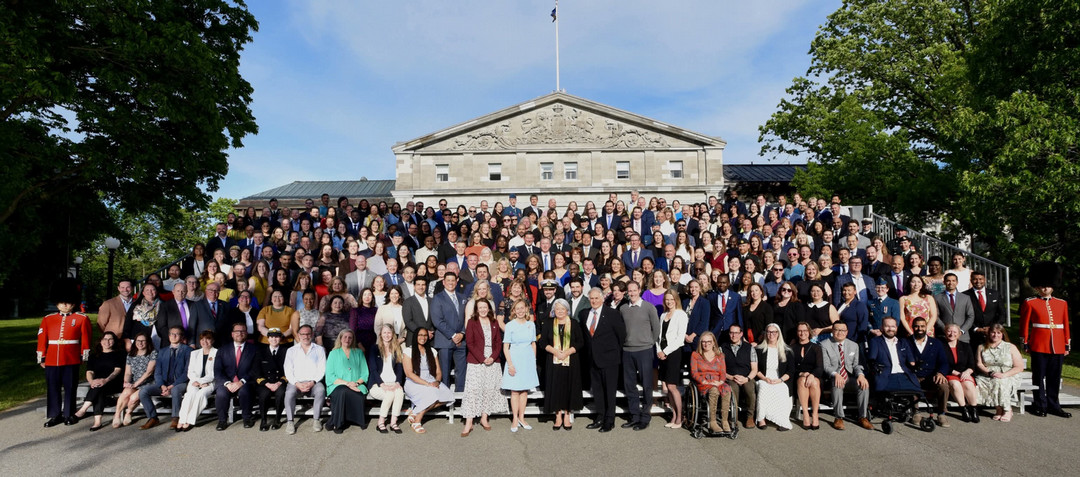
USask alumni Joseph Tootoosis (BA’13), Carly Romanow (JD’14), Nathaniel Cole (GCSEC’20), and Nuka Olsen-Hakongak (JD’21) were among the USask graduates chosen to take part in the two-week conference, which brought together emerging leaders in business, labour, government, non-profits, education, and the cultural sector, representing various regions of Canada.
“I believe the University of Saskatchewan’s presence at the GGCLC is an outstanding example of the university’s aspirational vision to Be What the World Needs,” Tootoosis told the Green&White. “At this point in Canada’s history, I would also suggest it reflects the university’s graduates striving to be what Canada needs—leaders committed to serving their communities, building relationships across sectors, and helping shape the country's future.”
Tootoosis said the GGCLC is one of Canada’s premier leadership development programs and is held once every three to four years. It brings together people from across the country to build lasting relationships and to gain a deeper understanding of Canada through immersive study tours in different regions, he said.
“Being selected is a significant honour and reflects both professional achievement and leadership potential,” Tootoosis told the Green&White. “This conference culminated in the delegates having the opportunity to present to the outgoing Governor General, Her Excellency Mary Simon, during her last public event.”
Tootoosis, a member of Flying Dust First Nation, lives in Saskatoon with his wife, USask graduate Karissa Kelln-Tootoosis (BComm’11, JD’16), and is a partner and lands and economic strategy advisor for the management consulting firm Kihew Consulting & Research. He earned a Bachelor of Arts degree in political studies at USask’s College of Arts and Science in 2013.
Carly Romanow is a Regina lawyer who earned her Juris Doctor degree at USask’s College of Law in 2014. Nathaniel Cole also lives in Regina, where he serves as the executive director of the Saskatchewan Federation of Labour. Cole earned the Social Economy, Co-operatives, and the Nonprofit Sector Certificate from the Johnson Shoyama Graduate School of Public Policy at USask in 2020. Nuka Olsen-Hakongak is a lawyer who lives in Cambridge Bay, Nunavut. She graduated with a Juris Doctor degree from the Nunavut Law Program in 2021 and now serves as in-house legal counsel at Nunavut Tunngavik Inc.
The Green&White recently connected with Tootoosis, Romanow, Cole, and Olsen-Hakongak to talk about their USask education, the GGCLC, and what leadership means to them.
Green&White: Why did you choose to study at USask?
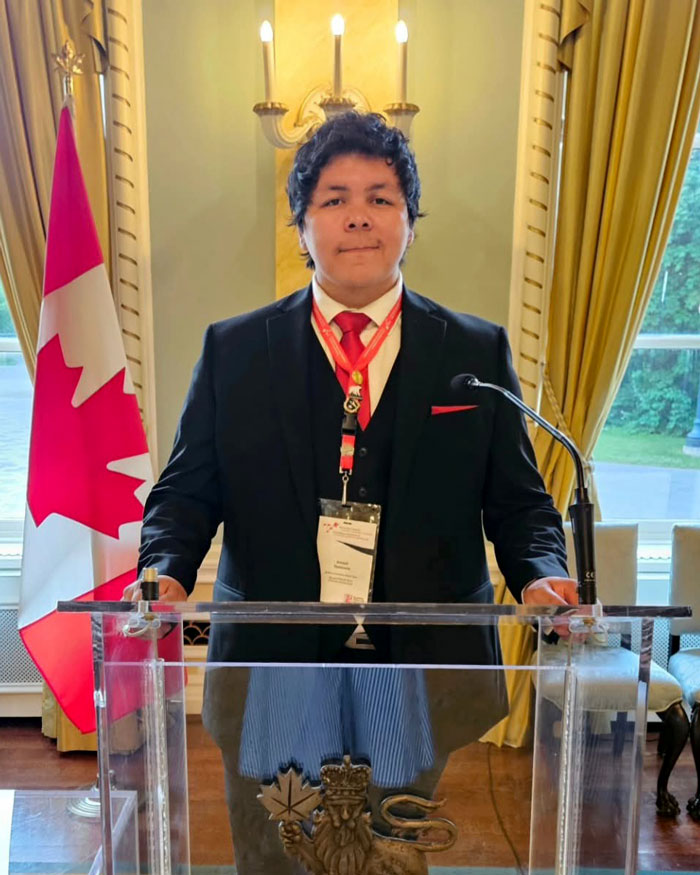
Tootoosis: My mother, Debra, and late father, Jake, both graduated from the University of Saskatchewan in the early ’90s and were both the first generation of their families to leave their communities and First Nations reserves to go to university. My brothers and I are also the first generation on both sides of our family not to attend residential school. We attended daycare and Brunskill School a couple of blocks from campus, where I had the opportunity to experience USask as a kid, and a young adult, and in a way that allowed me to imagine and dream about a life’s journey that followed in my parents’ footsteps, while making it my own.
Romanow: I wanted to stay close to home and have a smaller class size.
Cole: (I chose USask because of) the unique program offering that can ladder into a master’s degree, should I choose—and, to be honest, the world-class faculty, and the recommendation of another alum of the program.
Olsen-Hakongak: I was lucky. I got to study at USask because their law school partnered with the Nunavut Arctic College (NAC, which is Nunavut’s territorial college) and Government of Nunavut and rolled out the Nunavut Law Program (NLP). I was selected as one of the program participants. The JD program ran in Iqaluit, Nunavut, from 2017-2021 and accepted 25 people—a mix of Inuit and longtime Nunavut residents.
Green&White: What was the best part of being a USask student?

Tootoosis: Apart from the amazing lifelong friendships and personal connections I made, the greatest thing I experienced was having my eyes opened to the number of opportunities that were out there in the world for me—going to USask gave me hope for a better life when I truly needed it most. Unfortunately, my father had passed away just after I had graduated high school, and that loss had made university seem like it was out of reach; however, with the encouragement from my mom, grandparents, and a lot of God’s grace, I was able to do very well once I began my undergraduate studies. I took every advantage to use the resources, supports, and advisors I had at USask, and for the first time in my life it felt like I had hope and a future beyond what I had imagined was possible before. USask was also my special connection to being able to follow in my dad’s footsteps and was the beginning of what has been a very blessed journey to get to where I am today.
Romanow: I loved my time at the University of Saskatchewan. The College of Law was a small community that was down to earth and had a lot of fun. It continues to be a great network of colleagues and friends.
Cole: Being able to do this type of study in Saskatchewan while living at home and working was a huge part of it. No other program anywhere else would focus on Saskatchewan co-ops and social innovation, which were important to me as well.
Olsen-Hakongak: During the NLP I studied within Nunavut. That was the best. Even though I left my home community, Cambridge Bay, I stayed within the territory. Usually, Inuit and Nunavummiut have to leave the territory for post-secondary education opportunities outside of what NAC offers.
Green&White: How did it feel to learn you had been selected to represent Saskatchewan at the 2026 Governor General’s Canadian Leadership Conference?
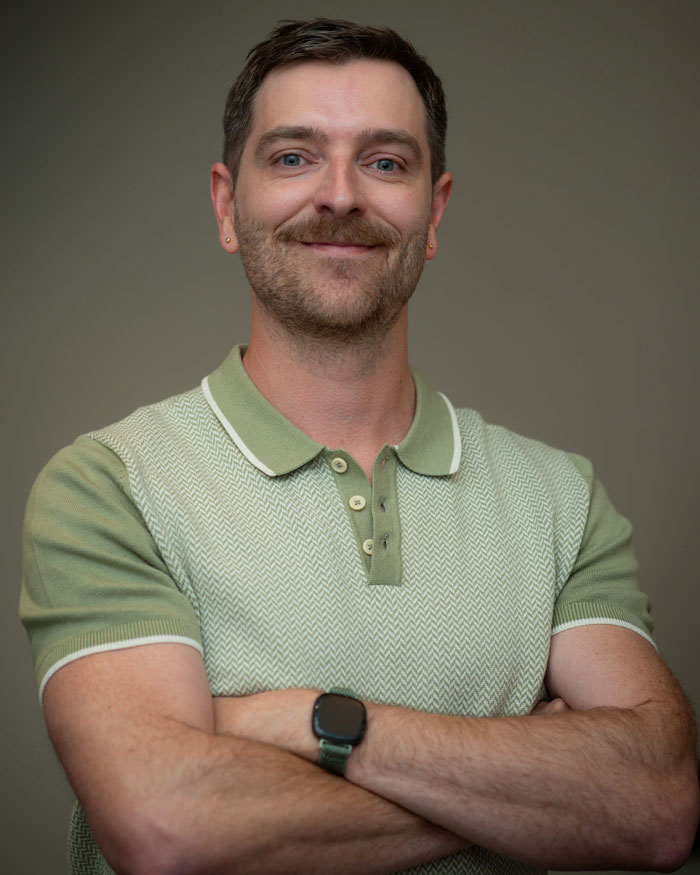
Tootoosis: It felt very sobering to me in what it means to represent your province, territory, community, and people at such a level; I felt that the honour and privilege to do this must also be dedicated to my First Nations roots and connections in northern Saskatchewan, particularly Flying Dust First Nation, Canoe Lake Cree First Nation, and Poundmaker Cree Nation. I also felt immense gratitude for all the family members, and generations of First Nations people who came before me, to bear the brunt of an unkind colonial history to our people and make it possible for me to have the opportunities I have in life; it gave me a focus and desire to make this opportunity count for all it’s worth.
Romanow: I was happily surprised to find out I was selected for the conference. It is a once-in-a-lifetime opportunity that many people apply for and do not get accepted. It was a huge privilege that I am very thankful for.
Cole: I was honoured and surprised, knowing how many people apply and never make it. I know great leaders in the labour movement and across the country that have done great things after their time with the GGCLC, so I felt it was a once-in-a-lifetime opportunity.
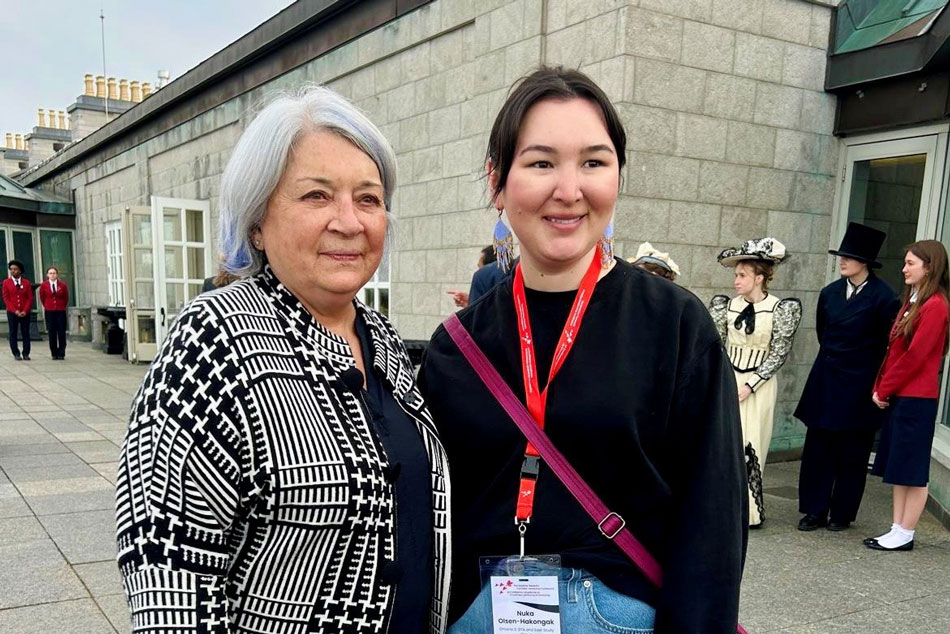
Olsen-Hakongak: Technically I’m a USask grad but attended on behalf of Nunavut. Being selected to attend the 2026 GGCLC on behalf of Nunavut was truly an honour. This was one of the last major events hosted by The Honourable Mary Simon, an Inuk from Nunavik (northern Quebec). In law school and through my studies I read and learned about Mary Simon’s advocacy work. To me, when one Inuk succeeds we all do. I had always wanted to meet her and even though I was there for myself, to develop my own leadership skills in all aspects of my life (e.g., aunt/volunteer/legal professional/coach), I also held that I would take my skills back to better my community and territory—as Mary Simon has done for not just Inuit, but as an impeccable role model for all Canadians.
Green&White: What was the highlight of the conference for you?
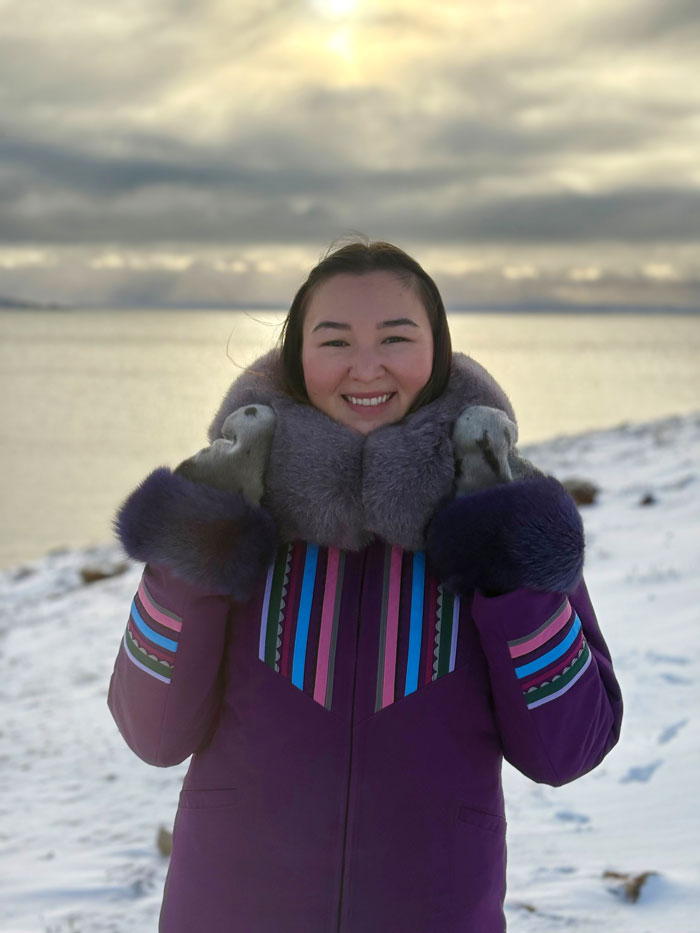
Tootoosis: Meeting Mary Simon, the first Indigenous Governor General. Most study groups presented to the entire conference all at once, but for my group’s presentation she was called away for important business that required her attention. However, she made a point to still have a more intimate and closer conversation with us that lasted a good while. Although I sat and listened for most of this time, she made eye contact with me and held it deliberately long enough so that I knew she wanted to hear what I had to share; in that moment she made me feel like I was valued, and that I was right where I belonged. It made me remember how important it is to do that for others—to make them feel seen, heard, valued, and even loved.
Romanow: Our study group got to go to the largest gold mine in Canada. It was incredible to witness the scale of the operations, the machinery, and the camp. The overall highlight was getting to know the other leaders in my study group. It makes me very proud to be Canadian and optimistic of the future to get to know the other leaders from across Canada.
Cole: (The highlight was) getting to see the incredible social economics on my study tour, which went to Newfoundland and Labrador—especially on Fogo Island and in Nunatsiavut (Inuit region in northern Labrador). In close second, as corny as it sounds, was getting to have this experience with other Saskatchewan and USask alumni.
Olsen-Hakongak: (The highlight was) meeting The Honourable Mary Simon and making lifelong friends from my study tour group.
Green&White: What does leadership mean to you?
Tootoosis: For what I have learned of leadership in my life thus far, it means using our greatest gifts to serve the greatest needs around us, with all our love and strength. God has given us all different gifts, but it is up to us to discover them and find a way to use them to serve others. I was very blessed to have a father teach me this and show me by his example with the life that he lived. He taught me that in our culture, it was a warrior’s purpose in life to serve others, and that it was my responsibility to find a way to do that. Likewise, he often shared with me the words of Chief Sitting Bull that “for us, warriors are not what you think of as warriors. The warrior is not someone who fights, because no one has the right to take another life. The warrior, for us, is one who sacrifices himself for the good of others. His task is to take care of the elderly, the defenseless, those who cannot provide for themselves, and above all, the children, the future of humanity.”
Romanow: Leadership is a skill that must be exercised and used in order to grow. You cannot take leadership for granted. In my opinion, humility and the desire for continuous learning are qualities of great leaders. Making connections, providing support, and growing inclusion are all principles that help people become better leaders.
Cole: Leadership, to me, is when people foster genuine relationships to chart a path forward together. The GGCLC reaffirmed the values of cooperation and solidarity as core to my style of leadership. Good leaders don’t always get their own way, nor should they.
Olsen-Hakongak: (It means) being authentic/being yourself.
Green&White: Would you recommend the conference to other USask alumni?
Tootoosis: I would—with one caveat: the people who stand to gain the most from a conference like the GGCLC are those who are able to entertain other ways of thinking, even without accepting them as their own. I believe we can all use this in everyday life to be able to speak and listen to the hearts of people who come from different backgrounds and walks of life. Just as Canada is vast and differs across its regions and coasts, so too do the cultures and perspectives of the people who live within it. Niigaan Sinclair, son of the late Justice Murray Sinclair, spoke beautifully at the conference about the word Kanata (Canada). Its literal translation is “the village,” but its meaning goes deeper than that: it is a place where people choose to face the seasons of life and its hardships together. It is the place where you give more than you take, and when we all do that, we are all taken care of. This is what Canada should be. We may all have different perspectives and sentiments about what it means to be Canadian—and, in my case, what it means to be a First Nation person whose Nation is a Treaty partner with Canada—but here in Saskatchewan, in Treaty Territory, we are all equally blessed to live in these beautiful lands we all call home, where we face the seasons of life together, as long as the sun shines, the grass grows, and the rivers flow.
Romanow: I would absolutely recommend the conference to other USask alumni. The ability to meet people from all across Canada, from different cultural, academic, and professional backgrounds, makes it an incredible environment to learn in. You learn about yourself; you learn about parts of our great country that you may never have thought of. The conversations between your study group and the people you meet in the communities you visit are thought-provoking and invaluable. It is an experience that I believe I will continue to unpack for years.
Cole: Yes. The GGCLC will undoubtedly teach you something about yourself, about others, and about this big messy federation of a nation we call Canada.
Olsen-Hakongak: Yes, I would, and have recommended it to other friends and family already. The conference allows you to see, hear, and listen to various perspectives of not only professions and sectors but also as people—as Canadians—which was important for me in my ongoing learning journey as a legal professional and as a regular human living day to day. Canadians come from diverse backgrounds. The experience, though at times feels long, is relatively short in the grand scheme of things. You’re able to see and experience a different part of Canada and share about your corner of our country. It is challenging but rewarding, and I told myself if I could attend and get through the conference, I can do anything (ha!).