


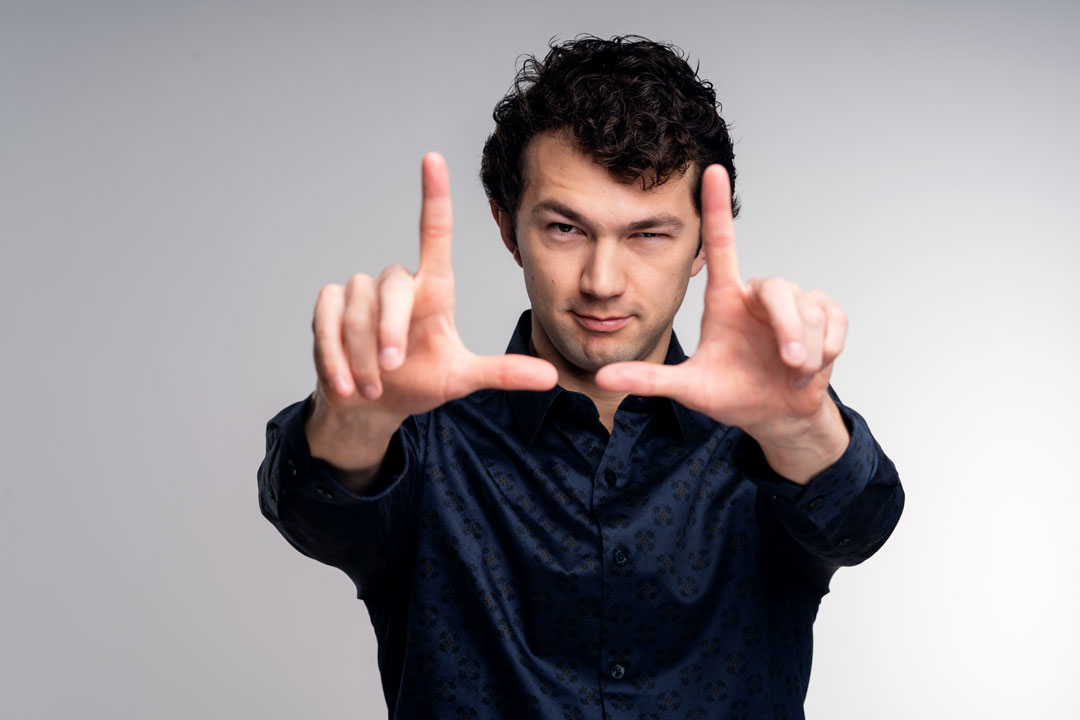
Bringing performances to the people
USask graduate Mac Dawson (BSc’16, BFA’18), the artistic director of Sum Theatre, prepares for another exciting season of Theatre in the Park
By SHANNON BOKLASCHUKUniversity of Saskatchewan (USask) graduate Mac Dawson (BSc’16, BFA’18) earned two degrees at USask’s College of Arts and Science before launching his career as a professional theatre artist in Saskatchewan. Today Dawson is the artistic director of Sum Theatre, a Saskatoon-based independent theatre company that builds community by creating theatre experiences for everyone.
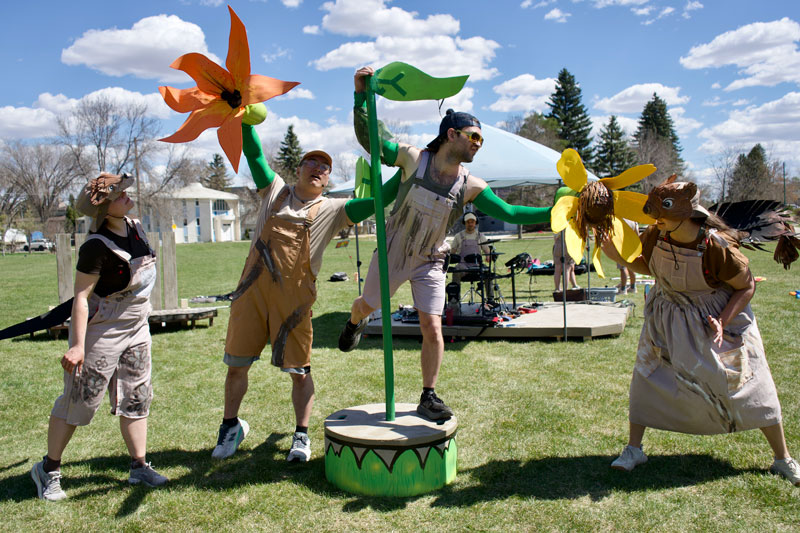
From May 14 to June 30, 2026, Sum Theatre will present The Colour of the Town—the company’s latest Theatre in the Park show—in Saskatoon, Regina, Prince Albert, and La Ronge. Theatre in the Park offers people of all ages the opportunity to enjoy a professional theatre production, for free, in a nearby neighbourhood park. Sum Theatre describes The Colour of the Town as “a story about personal choice, differing opinions, and the importance of finding a way to get along as the people of Taupe Town are challenged by their young residents to look beyond their current colour preference and embrace all the possibilities.”
“The Colour of the Town will hit close to home for many folks,” said Dawson. “This year’s Theatre in the Park is a gentle look at democracy and how it can be intimidating to have a different opinion.”
The Green&White asked Dawson about his role at Sum Theatre, the success of Theatre in the Park, his USask education, and his advice for current and prospective USask drama students.
G&W: You are the artistic director of Sum Theatre. When did you take on that role, and what has the role been like so far?
Dawson: After three years as an associate with Sum Theatre, I stepped into the role of artistic director in the fall of 2023. Now in my third season leading the company, I continue to learn about leadership and the care required to nurture the relationships that drive a theatre company's operations. The job is broad, including community relations, fundraising, and, most importantly, how to create meaningful theatrical experiences that embrace audiences of all ages. I have been quite fortunate to learn from my mentors, (USask alumni) Joel Bernbaum (PhD’24) and Yvette Nolan (MPP’24), about core values such as reciprocity and empathy, which guide how I take care of my colleagues, partners, and audiences.
G&W: What makes Sum Theatre unique?
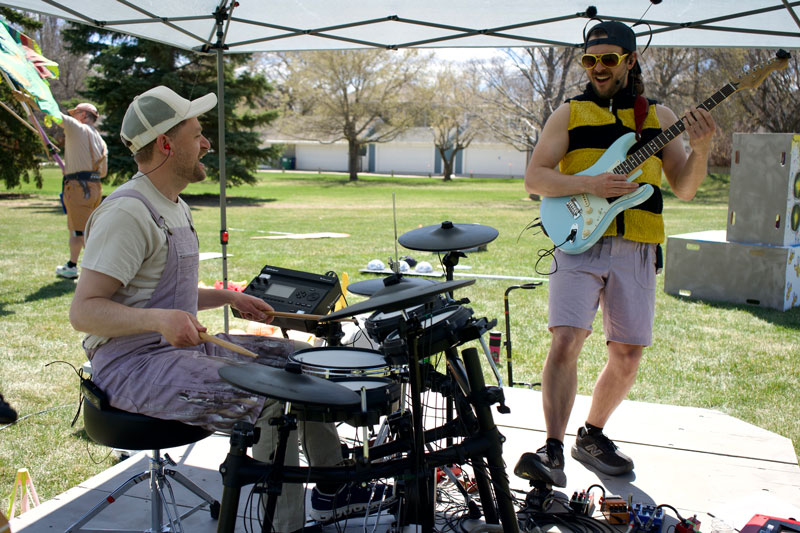
Dawson: Setting up in a different neighbourhood park every day and performing for free are highly unusual practices in theatre. Audiences can find us five minutes from home, and many more people stumble across our shows while out for an evening stroll. We bring art to the people, at a price inclusive of everyone. As a result, thousands of people who have never seen a play, or who might think theatre is not for them, have transformational experiences at Theatre in the Park.
Reaching over 11,000 people in 35 communities last year, Theatre in the Park is the only theatre program in Saskatchewan operating with this degree of scale, accessibility, and reach. We have 13 artists and technicians on site at every performance, plus our designers and playwright. Everyone is paid. This is only possible thanks to an immense web of funders, local business sponsors, community partners, and donors, who believe in the impact of this work.
Finally, our way of creating plays is called devised theatre; we make theatre from scratch. We commission a playwright to write a short story about an important topic. Then, for one week in January, we hold a workshop of jam-sessions where all of our artists write songs, dream up designs, and collectively create the production. In the following months, our playwright and music director arrange the scenes and songs from the workshop into our rehearsal script. In theatre, we typically pick up a pre-existing script and interpret it, so it is refreshing and gratifying for the artists to weave their DNA into every melody as we create an original Saskatchewan play for Saskatchewan audiences.
G&W: Theatre in the Park is returning for its 14th season. Why do you think Theatre in the Park has been such a success?
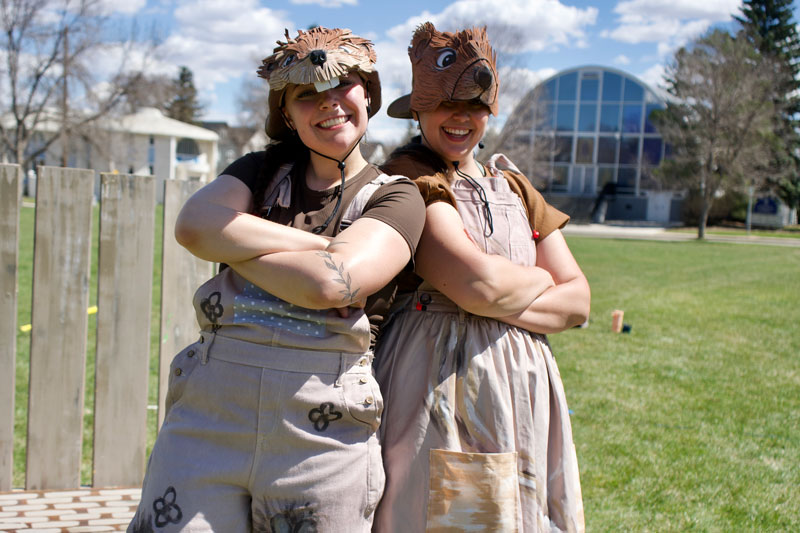
Dawson: Theatre in the Park’s success comes from its grassroots approach. We work with 25 community associations in Saskatoon, and more across the province, to plan and perform in their local parks each year. Many of these associations have supported Theatre in the Park since the program began, which is longer than I have worked in theatre. They all value radically inclusive community-based programming and wish to see their families and friends benefit from it.
G&W: This year’s play is The Colour of the Town. What can attendees expect from this show?
Dawson: Audiences can expect a fun, 45-minute musical play, jam-packed with original songs and vibrant puppets. Every day in rehearsal, someone comments on the songs being “bangers.” Families will certainly remember this year’s show for a giant butterfly puppet soaring overhead.
G&W: Why was this play chosen for Theatre in the Park 2026?
Dawson: Our plays are original stories. When choosing a theme, we ask questions like, “What stories do our neighbours need to hear?” This year, democracy feels timely. Across the globe, it is being eroded. Alongside those threats, we have seen people grow increasingly apathetic, believing they have no power over changes in such a core facet of our society. So, they shrink back; they disengage. We are encouraging people to swim against that tide of apathy, because it is important to talk with our neighbours or our friends on the playground—especially when we disagree. We can all create massive change where it matters most: in our neighbourhood, close to home.

G&W: You are a USask alumnus. How has your USask education been beneficial to you as a theatre artist in Saskatoon?
Dawson: The USask School for the Arts - Drama trains artists to be well-rounded, because professionals must have versatile skills to keep working in Saskatchewan. It is a smaller market here, which pushes artists to produce, write, or design for their own productions. My current position at Sum requires an extension of this Swiss Army theatre-maker mentality, as it required me to learn various business management skills in addition to deepening my artistic practice.
The USask drama faculty also prioritize creating opportunities for students to work with local theatre companies. My instructors became my colleagues, and now we jointly support the development of emerging artists, much in the same way they helped me launch my career.
G&W: You earned a Bachelor of Fine Arts degree in drama and a Bachelor of Science degree in physiology and pharmacology at USask. What inspired you to study these two diverse subject areas?
Dawson: The physical structure, functions, and expression of the body fascinate me. I initially planned to pursue a career in health sciences, and medicine, but as I accumulated acting electives, I felt more drawn to the theatre. In my fourth year of the physiology and pharmacology program, I had run out of acting classes to take, which left a distinct hole in my life. After spending far too many evenings reading the drama course descriptions and asking myself “What if I tried that? How interesting, how fulfilling could it be to take a movement class, or a voice class?” I took that pattern as a sign and auditioned for the acting program.
G&W: You were honoured with the Walter Mills Award in Drama at USask’s 2018 Spring Convocation. How did it feel to receive that award?
Dawson: Concluding my time at USask by receiving the Walter Mills Award in Drama was a great honour. My family supported me greatly when I chose to pursue the arts, and this award affirmed that I was making good on their belief in me. Growing up, I never considered myself artistic, so this was also a moment for me to reflect on how much my self-concept had changed, and how I had taken the agency to drive that change for myself.
G&W: What is your advice for current and prospective USask students who may want to study drama and follow in your career path?
Dawson: Try a few classes and meet all the faculty you can. You never know when one person’s unique perspective on an artistic practice, or any topic, will suddenly resonate with you. Draw on those touchstones to solidify why you want to pursue this program, and what downstream career prospects might suit you in this field. My early twenties were an ideal time to cultivate my artistic sensibilities, and I was particularly drawn to the athletic lens of performance. My studies at the drama department then brought out my leadership skills, which set me on a path towards becoming an artistic director
G&W: After Theatre in the Park ends, what are your upcoming plans and projects?
Dawson: Planning for Theatre in the Park 2027 starts right away! Sum Theatre will also open submissions for our play development program, The First Monday, very soon. Aspiring and experienced playwrights should keep an eye out for that, as we program public readings of new plays all fall and winter. Once Theatre in the Park closes in late June, I very much look forward to spending a good deal of July and August hiking in the mountains.
G&W: Is there anything else that you would like to add?
Dawson: Theatre in the Park is for everyone so, if you are reading this, find us in your local park! It is free and only 45 minutes. Our tour schedule is at sumtheatre.com.