


kihci-okāwīmāw askiy Knowledge Centre receives $2.6 million from Weston Family Prairie Grasslands Initiative
A new Indigenous Grasslands Stewardship and Knowledge Exchange Network has been launched at the University of Saskatchewan (USask).
Stretching across Saskatchewan, Alberta, and Manitoba, Canada’s prairie grasslands support hundreds of species, including migratory birds, pollinators and people, while also sustaining soil health, water systems, livestock production, and Indigenous stewardship. Yet of the roughly 141 million acres of historical grasslands in Canada, only 26 million acres remain intact today. What remains of prairie grasslands represents a rare and urgent opportunity to protect biodiversity at scale.
“Indigenous lifeways, languages, and food systems evolved with the environment, and these reciprocal relationships shaped the ecological processes that can restore the health of grasslands,” said Candice Pete-Cardoso (CIBA'97, BComm'99, MPA'13), director of the kihci-okāwīmāw askiy Knowledge Centre at USask.
The new Indigenous Grasslands Stewardship and Knowledge Exchange Network has been launched by the kihci-okāwīmāw askiy Knowledge Centre together with the Indigenous Kinship Circle (IKC). The IKC is a cross-boundary community of practice for Indigenous people and allies working to advance the well-being of communities across the Central Grasslands of Turtle Island.
“This project strengthens Indigenous-led conservation across the Saskatchewan, Alberta, and Manitoba grasslands though cultural knowledge exchange, peer mentorship, hands-on workshops, and digital hub development,” said Pete-Cardoso. “The project supports First Nations land stewards, harvesters, Elders, youth, and students, while advancing Indigenous Science and Traditional Ecological Knowledge in grassland conservation.”
The Indigenous Grasslands Stewardship and Knowledge Exchange Network has received $2.6 million in funding from the Weston Family Prairie Grasslands Initiative funded by the Weston Family Foundation to support the project over five years until 2030.
“Canada’s prairie grasslands are some of the most ecologically valuable and threatened ecosystems in the world, and we have a responsibility to protect them for future generations,” said Christian Bauta, chair of the Weston Family Foundation. “There’s no singular solution. These are working landscapes and protecting them means supporting a range of long-term solutions that reflect the realities of the people connected to the land; their knowledge, their livelihoods, and their long history of stewardship.”
“By 2030, the Indigenous Grasslands Stewardship and Knowledge Exchange Network will facilitate mentorship partnerships with First Nations across the Prairies, helping scale Indigenous-led conservation through stronger networks of knowledge sharing, stewardship, and land-based learning,” said Dr. Melissa Arcand (PhD'13), academic director of the kihci-okāwīmāw askiy Knowledge Centre, and associate professor in the Department of Soil Science at USask.
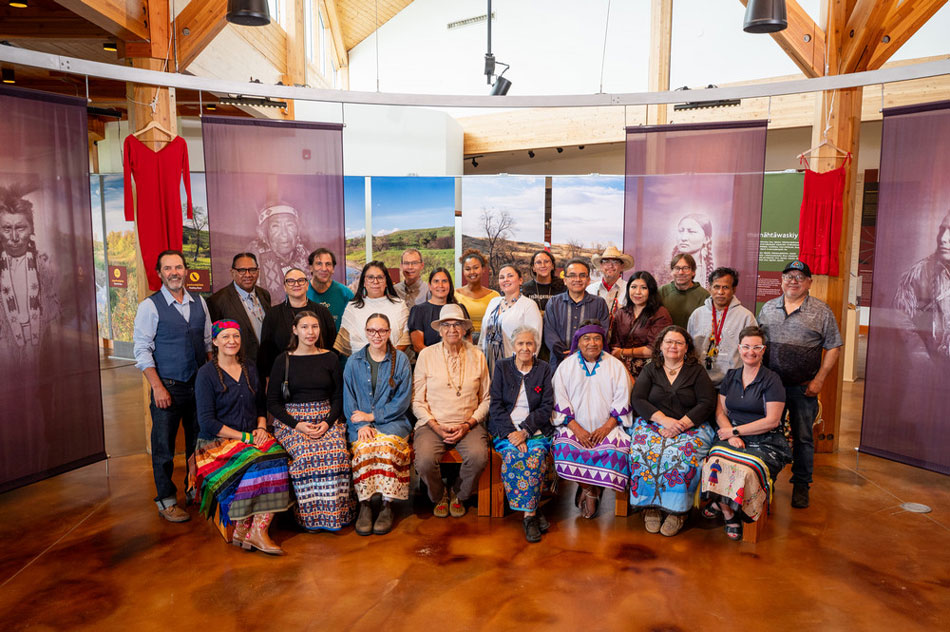
The network is holding its first in-person meeting this week bringing together IKC representatives from Mexico, the United States, and Canada and the kihci-okāwīmāw askiy Knowledge Centre steering committee.
“This is an Indigenous-led event and project,” said Naomi Carriere (BSc'02, PGD'04, MSc'10), manager of the Indigenous Grasslands Stewardship and Knowledge Exchange Network. “The week-long event is an opportunity for the group to come together to review goals, objectives, and anticipated project outcomes and to broaden perspectives for the Indigenous Grasslands Stewardship and Knowledge Exchange. This is our first step in nation-to-nation building and understanding what it would look like for the grasslands network.”
About kihci-okāwīmāw askiy Knowledge Centre: The kihci-okāwīmāw askiy (Great Mother Earth) Knowledge Centre is founded on the principle that the land is our first teacher and of central importance to Indigenous peoples. The centre leads through Indigenous worldviews, advancing knowledge sovereignty and uplifting the ethically grounded principles that guide how traditional knowledge is accessed, earned, and shared. Rooted in Indigenous leadership, values, and relational accountability, the centre is committed to ensuring that Indigenous Knowledge systems are respected, protected, and positioned with prominence across academic and scientific environments.
About USask: The University of Saskatchewan (USask) is located in Saskatoon, Sask., on Treaty 6 territory and the traditional homeland of the Métis. Research, teaching and learning at USask are enhanced by its array of world-class centres and facilities. A range of excellent programs, from arts and science, business, law, and public policy, to engineering, agriculture, medicine, and veterinary medicine, positions USask to bring unique perspectives to key global challenges. With more than 26,600 students from around the globe, including nearly 3,300 self-declared Indigenous students, our strong community and well-recognized experts will continue to drive USask to be the university the world needs.
About the Weston Family Prairie Grasslands Initiative: The Weston Family Prairie Grasslands Initiative is a 10-year, $70 million commitment to the long-term protection of biodiversity within one of Canada’s most ecologically valuable and threatened ecosystems. The initiative is centred around collaborative, community-led projects that draw on local expertise and Indigenous knowledge to promote best land stewardship practices, address the economic pressures influencing land use, and deliver training, tools, and resources that support the future of Canada’s Prairie Grasslands.
Article originally published at https://news.usask.ca