


Take 5: Five ways USask researchers are working with the UN to reverse climate change
USask professor, graduate student work to raise awareness about the status of Earth’s cryosphere
By Kristen McEwenUniversity of Saskatchewan (USask) researchers are working with the United Nations Educational, Scientific and Cultural Organization (UNESCO) to raise awareness and contribute to an action plan to save the Earth’s cryosphere.
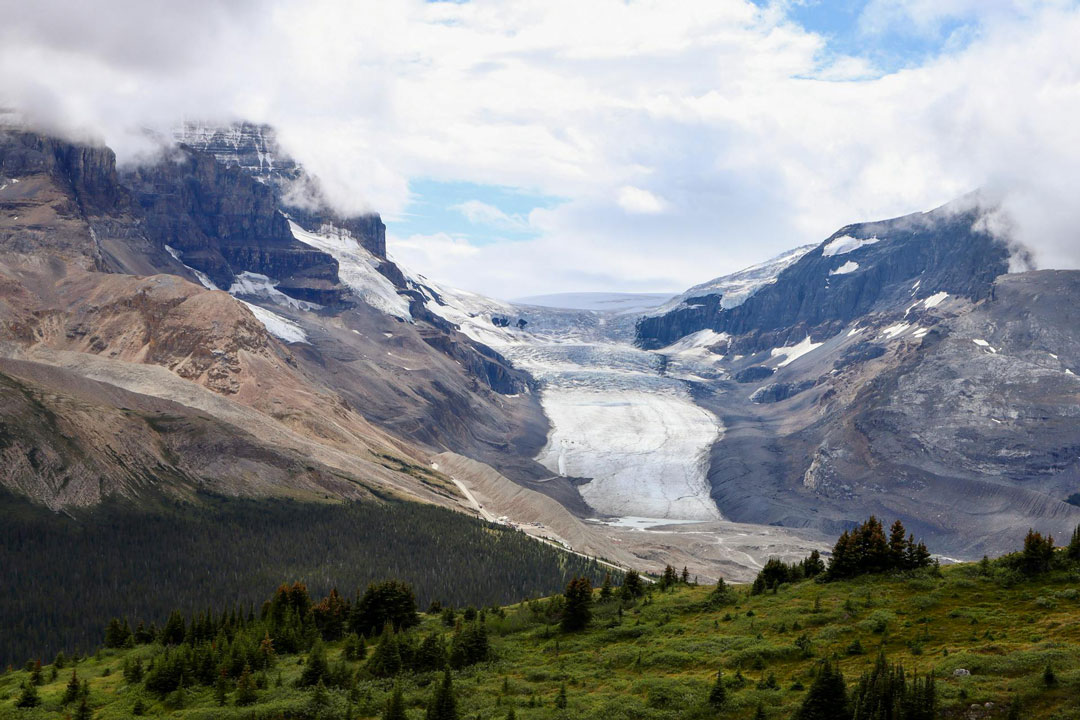
The cryosphere refers to all of Earth’s water in solid form. This can be glaciers, snow, ice caps, sea and freshwater ice, permafrost, and frozen ground. Cryospheric sciences make up one of five components of the climate system.
Dr. John Pomeroy (BSc’83, PhD’88), a USask graduate and distinguished professor in the Department of Geography and Planning in the College of Arts and Science, and USask PhD student Zoë Johnson recently participated in, presented, and facilitated discussions on the world stage about how to save the cryosphere.
Pomeroy is principal chairholder in the UNESCO Chair in Mountain Water Sustainability, director of the Global Water Futures Observatories, director of USask’s Centre for Hydrology, and a member of the Global Institute for Water Security. In 2025, he was appointed as co-chair of the UN Advisory Board for the International Year of Glaciers’ Preservation (IYGP). He was later appointed by UNESCO to be the Chair of the Ad Hoc Committee for the Decade of Action for Cryospheric Sciences (DACS).
Here are five ways USask researchers are contributing to saving the Earth’s cryosphere:
1. Meeting at the United Nations (UN) for World Water Day/World Glaciers Day
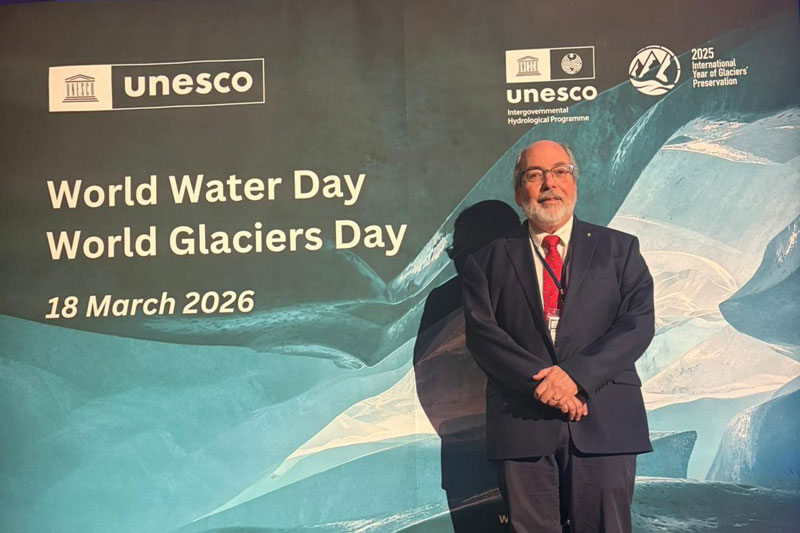
World Day for Glaciers and World Water Day from March 18-19, 2026, in Paris, France. Pomeroy and Department of Geography and Planning PhD student Zoë Johnson met with other global hydrology and cryosphere experts and researchers, while contributing to high-level panel discussions and raising issues from young scientists.
“The Decade of Action for Cryospheric Sciences is our best opportunity to slow down the melt of our glaciers, snowpacks, and permafrost and to design solutions that will help us adapt to the changes to water supply and sea level that this melt will inevitably generate,” Pomeroy said.
2. Delivering keynote speeches, high-level discussions

During this year’s World Water Day, USask researchers organized and contributed to a number of events. Pomeroy delivered a keynote address in his role as Chair of the Ad Hoc Strategic Management Committee of the Decade of Action for Cryospheric Sciences. He discussed the transition from IYGP to DACS, and the challenge the cryosphere faces due to global warming. Pomeroy noted the risks include sea levels rising, sea ice decline, snow cover, glacier and icesheet retreat, permafrost thaw, hydrological change, risk management, water sustainability, and community adaptation.
Pomeroy and Johnson organized a session on how to improve an integrated observation and prediction system for the cryosphere. An increase in cryospheric understanding from field observations can lead to benefits, including improving and integrating scientific monitoring and prediction. The session was conducted with colleagues linked to Global Water Futures Observatories and the International Network for Alpine Research.
“Developing integrated observation and prediction systems for the cryosphere was an idea that we proposed to the World Meteorological Organisation’s High Mountain Summit in 2019, where it was adopted as a global objective,” Pomeroy said.
“This session at UNESCO allowed us to work out what these integrated systems would look like, what services they could provide for early warning of natural disasters, water supply predictions and adaptation and how we could design these for cold regions.”
Geography and Planning professor Dr. Corinne Schuster-Wallace (PhD) joined Pomeroy and USask graduate Dr. Dhiraj Pradhananga (PhD’20) to organize a session via Zoom to discuss cryospheric loss and limitations to adaptation, vulnerability, and equity in Indigenous and other communities. Pomeroy, Schuster-Wallace, Pradhananga are all part of the UNESCO Chair in Mountain Water Sustainability.
3. Creating a comprehensive synthesis report
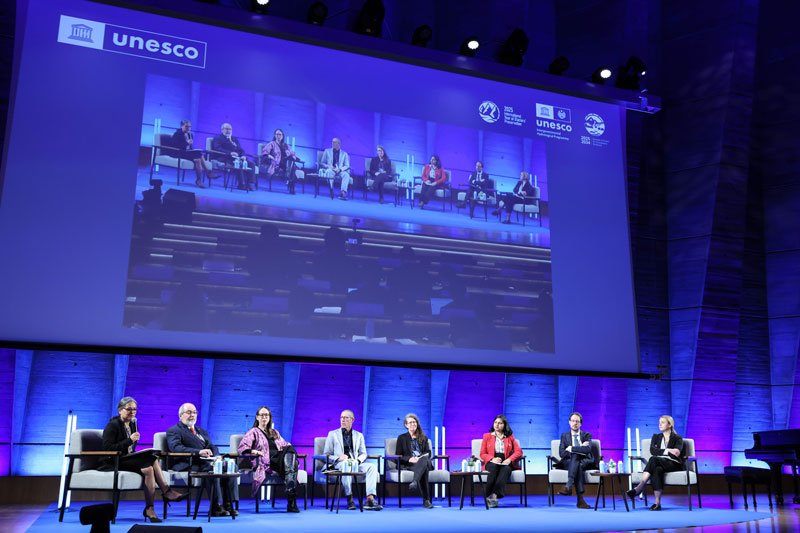
Pomeroy and Johnson were key contributors to the UNESCO report Synthesis of the Decade of Action for Cryospheric Sciences 2025-2034. This report highlights:
- Impacts of losing the cryosphere
- Observing and predicting our changing cryosphere
- Socioeconomic impact, vulnerability and adaptation
- Education and capacity building
- Creating actionable outcomes, including prediction modelling approaches, toolkits for policymakers and non-experts
- Cryospheric risk management solutions
“Coming from a country like Canada, where snow and ice form a big part of our national identity, it was very meaningful to help distill the importance of the cryosphere in a global context,” Johnson said. “These systems are rapidly changing with major implications for freshwater systems, hazard risk, and social wellbeing around the world.”
4. Inspiring change through art and science
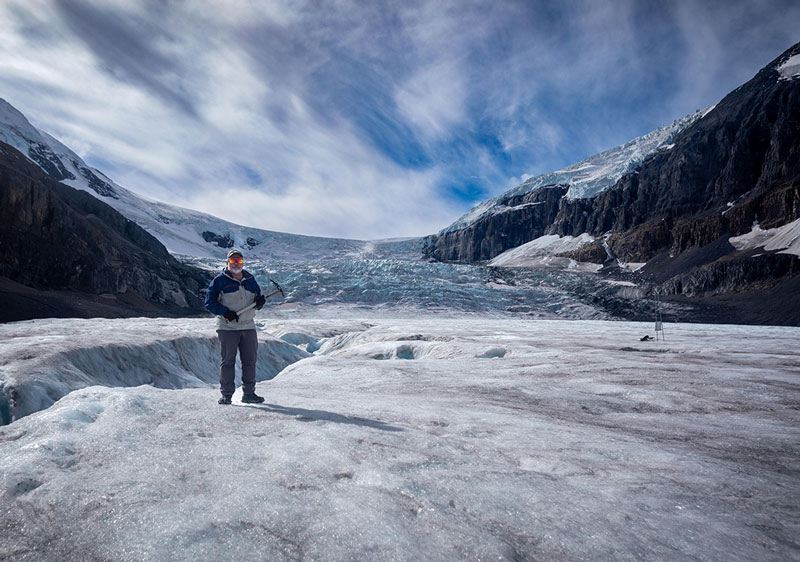
During the UN’s World Water Day events, Pomeroy organized an art exhibition of paintings and sketches from the book The Great Thaw: An Homage in Art to the Vanishing Crysosphere, published by UNESCO and USask in 2025.
The book features 140 artworks paired with scientific explanations to explore the impact of climate change on glaciers and the broader cryosphere—snow and ice that sustain life in mountain, forest, and downstream regions. The book combines science and art to inspire and promote strategies for glacier preservation.
Pomeroy is a co-author of this book with Dr. Trevor Davies (PhD), Pro-Vice-Chancellor for Research, Enterprise and Engagement from the University of East Anglia. The illustrations are by Gennadiy Inavov, an artist based in the United Kingdom.
5. Launching new Decade of Action for Cryospheric Sciences (DACS)
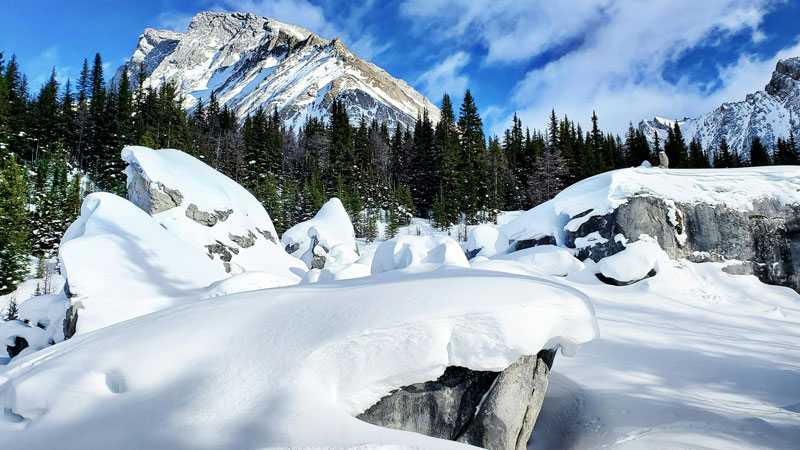
The year 2025 was named the International Year of Glaciers’ Preservation (IYGP). As UNESCO closed the IYGP, they launched the new Decade of Action for Cryospheric Sciences with dedicated sessions and side events highlighting the vital inks between the cryosphere and water.
By creating a plan for the next 10 years, UNESCO and researchers from around the globe are working together to turn around trends in global warming. The plan outlines ways to establish mechanisms to adapt, mitigate, and eventually reverse cryospheric decline and catastrophic impacts on fresh water and oceans. USask researchers and students have worked to be what the world needs in their contributions to these events.
“The new Decade aligns with Canada’s strategic interests, including northern infrastructure, freshwater security, Indigenous community sustainability, the preservation of UNESCO World Heritage sites, and the impacts on coastal communities,” Pomeroy said.
“The Decade will need a global inventory, improved predictions, and strategies for risk management solutions, and adaptation. The University of Saskatchewan’s water scientists stand ready to address this global imperative.”