Take 5: Five things to know about USask’s economic and social impact report
The new study, University of Saskatchewan Economic and Social Impact Analysis, 2024/25, was conducted in partnership with the independent scientific research institute RTI International
By SHANNON BOKLASCHUKA University of Saskatchewan (USask) graduate’s average earnings will increase by more than $13,000 annually for each degree completed—a total of between $850,000 and $1.4 million over a lifetime.
That’s one of the key findings of a new study, University of Saskatchewan Economic and Social Impact Analysis, 2024/25, commissioned by USask and conducted in partnership with the independent scientific research institute RTI International.
Data from the study was publicly released online in December 2025, highlighting the many ways USask contributes to the economic, social, and environmental well-being of Saskatchewan and beyond.
Here are five key pieces of information from the report.
1. USask supercharges the economy.
USask contributed $2.0 billion to Saskatchewan’s economy for 2024/25—an increase from $1.2 billion from 2015. To put this number into context, Saskatchewan’s gross domestic product (GDP) is roughly $110 billion, meaning that nearly two per cent of the provincial economy is tied directly or indirectly to the university. For every $1 the Government of Saskatchewan invests in USask, USask brings in $1.48 from non-provincial government sources.
Also noteworthy is that visitors to USask spent an estimated $100.4 million in Saskatchewan in 2024/25, and USask employs 13,320 people directly and indirectly in the province. Every $1 invested into USask by the Saskatchewan government translates to $3.64 of GDP and $1.99 in labour income. One-third of the province’s costs to support the university are returned through the university’s tax generation.

2. USask attracts talent and builds Saskatchewan’s workforce, with USask graduates reporting higher earnings.
During the past decade, USask has added more than 27,000 graduates to the provincial workforce, and an average of 4,500 highly skilled and highly educated people graduate from USask every year. Nearly 70 per cent of them stay in the province: working, building businesses, starting and growing families, contributing to the economy, and growing the provincial tax base. USask graduates also report higher employment rates and higher earnings. With each subsequent USask degree, a graduate will earn an additional $13,000 annually, on average—between $850,000 and $1.4 million over a lifetime.

3. The programs offered at USask contribute to a broad range of professions that require post-secondary education.
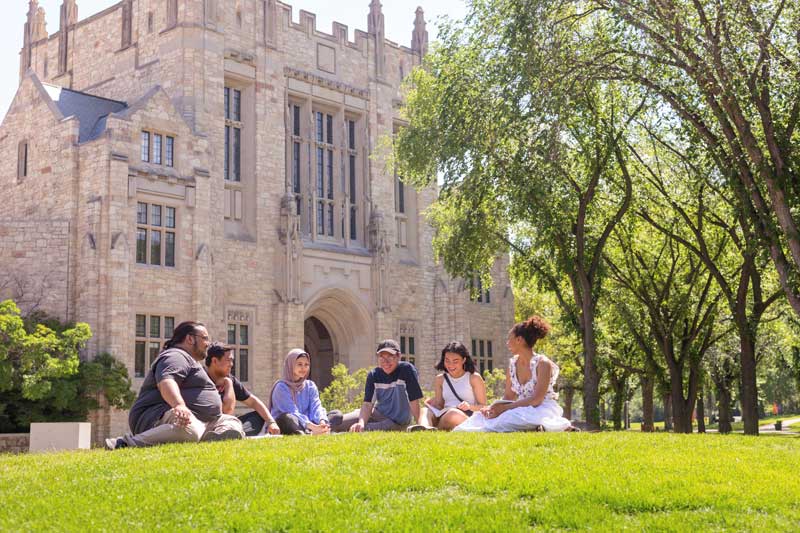
USask is a thriving, dynamic university that welcomes and attracts a diverse student body from 130 countries. Self-declared Indigenous enrolment at USask is among the highest in the country and nearly matches percentage population of Indigenous people in the province. USask offers undergraduate and graduate degrees and certificate programs from 17 colleges and schools. These programs span health (dentistry, nursing, medicine, veterinary medicine, pharmacy, nutrition, public health, kinesiology, and physical therapy), society (business, law, education, public policy), engineering and the natural sciences, the social sciences, the humanities, and the visual and performing arts. Each year, USask offers approximately $60 million in scholarships to attract and support talent.
4. USask has a goal of 100% of undergraduate students participating in at least one experiential learning opportunity.
Experiential learning refers to a range of programs that give students an opportunity to gain hands-on experience and to develop critical skills. USask understands that these experiences—such as research experiences, co-ops, internships, clinical experiences, and field practicums—help prepare USask students for their future careers. The percentage of USask students who participated in at least one experiential learning opportunity increased from 79 per cent in 2018/19 to 90 per cent in 2023/24.

5. USask is Saskatchewan’s flagship research university.
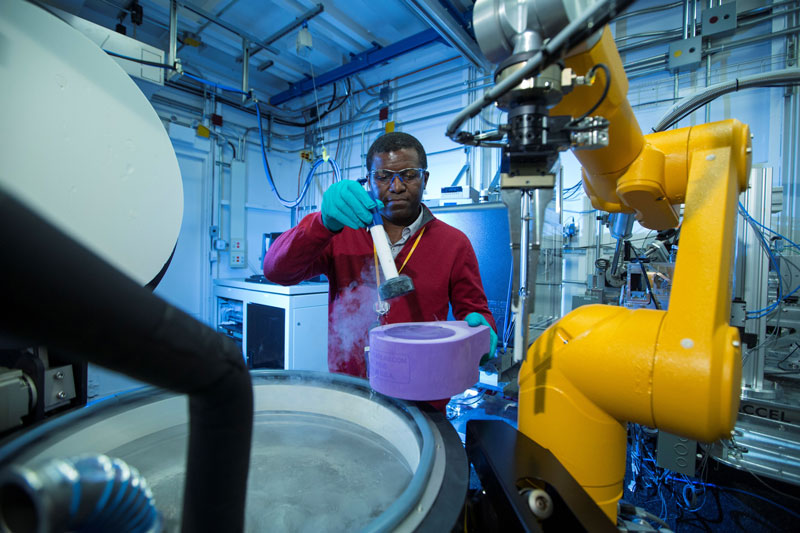
USask is home to the province’s only medical, dental, pharmacy and nutrition, agriculture and bioresources, veterinary medicine, and law schools. USask is also the only university in the country to host four Major Science Initiative (MSI) national research centres: the Vaccine and Infectious Disease Organization (VIDO); the Canadian Light Source (CLS), which houses Canada’s only synchrotron; the Super Dual Auroral Radar Network (SuperDARN); and the Global Water Futures Observatories (GWFO).
USask research is a source of optimism at home and around the world. For example, the university designs better, higher-yielding, tougher crops. If you’re eating lentils anywhere in the world, chances are they are USask lentils, since USask research has powered Canada to become the world’s single-biggest exporter of lentils. In fact, 90 per cent of Canada’s lentil exports were designed at USask.