


Take 5: Five facts about USask alumnus John G. Diefenbaker
On Sept. 20, 1975, former Prime Minister John G. Diefenbaker turned the sod to mark the construction of the Diefenbaker Canada Centre on the USask campus
By Brooke Bolotniuk, Diefenbaker Canada CentreThe Diefenbaker Canada Centre, overlooking the South Saskatchewan River in Saskatoon, is located across from the Education Building and the Edwards School of Business on the University of Saskatchewan (USask) campus. Although the building’s outward appearance may be unassuming, inside visitors will discover one of USask’s hidden gems.
Founded by the Right Honourable Prime Minister John G. Diefenbaker (BA’15, MA’16, LLB’19, DCL’58)—Canada’s 13th prime minister and a USask graduate and honorary degree recipient—the Diefenbaker Canada Centre (DCC) is a museum that builds on the life and legacy of Diefenbaker by inspiring civic engagement through education and community outreach.
In addition to the permanent One Canada exhibition showcasing Diefenbaker’s life and political history, the DCC hosts a wide variety of temporary exhibits. The latest exhibit, Bridge City Beats, is co-curated by USask alumna Helanna Gessner (BA’16) and Kelsey Carson with support from the USask music department. Highlighting the Amati Quartet and the Kaplan Music Collection, the exhibit explores cultural diversity through musical instruments.
Below, USask alumna Brooke Bolotniuk (BA’25) writes about five ways in which Diefenbaker is linked to the University of Saskatchewan’s history.
1. Prime Minister John Diefenbaker is buried on the University of Saskatchewan campus.
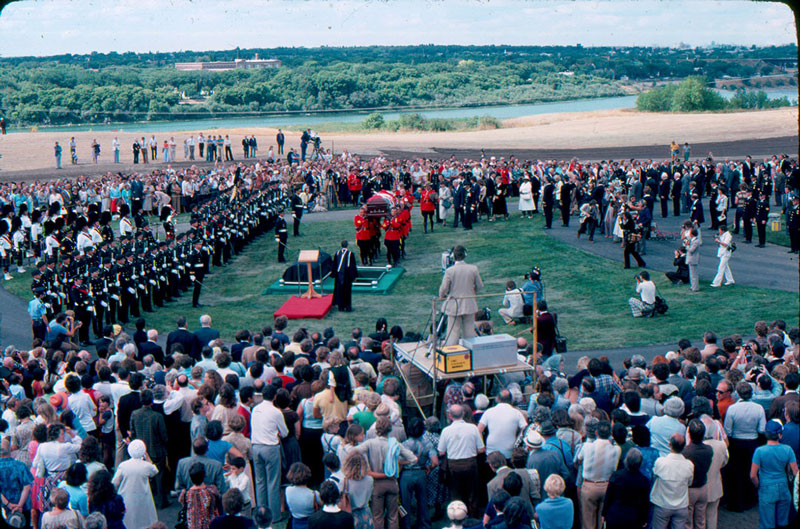
Prior to his death on Aug. 16, 1979, John Diefenbaker consulted government officials about his funeral arrangements and final resting place. Both Saskatoon and Prince Albert, Sask., remained incredibly important to Diefenbaker and he wanted to honour both cities in death. Diefenbaker grew up in Saskatoon and the Prince Albert area, but he also represented the Prince Albert community for the majority of his political career. Ultimately, Diefenbaker chose to be buried on the University of Saskatchewan campus as he served as USask’s chancellor for the last 10 years of his life. After he lay in state for two days in the Hall of Honour at Parliament in Ottawa, Ont., Diefenbaker was transported via train to Saskatoon, where thousands of people gathered along the way to pay their respects.
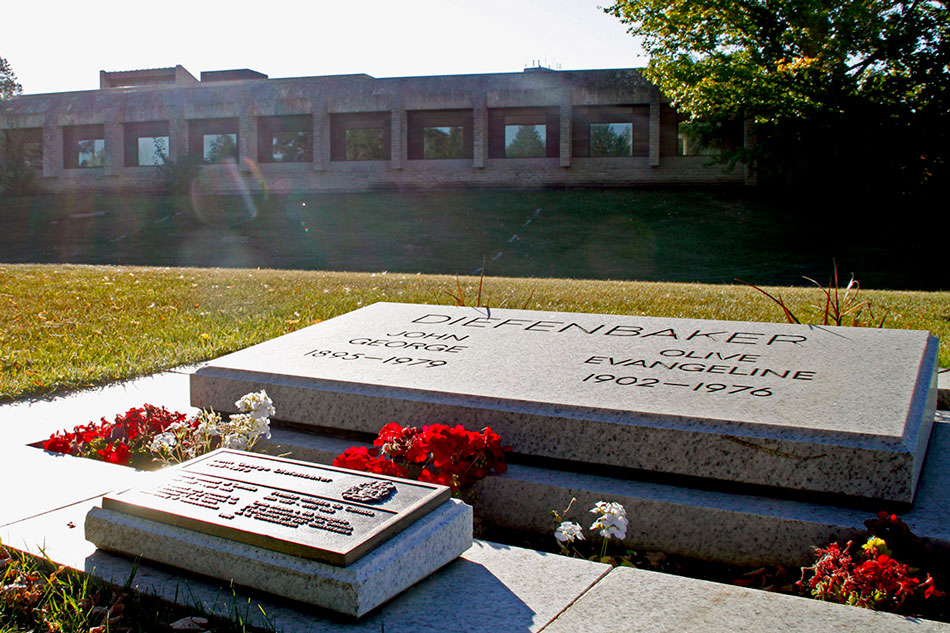
On Aug. 22, 1979, Diefenbaker and his wife, Olive, were laid to rest on the grounds of the University of Saskatchewan just outside of the Diefenbaker Canada Centre. Their graves face north, toward the city of Prince Albert, paying tribute to the city where Diefenbaker remained elected as a Member of Parliament for the last 26 years of his life.
2. The DCC is the only museum in Western Canada to house a prime minister’s personal collection.
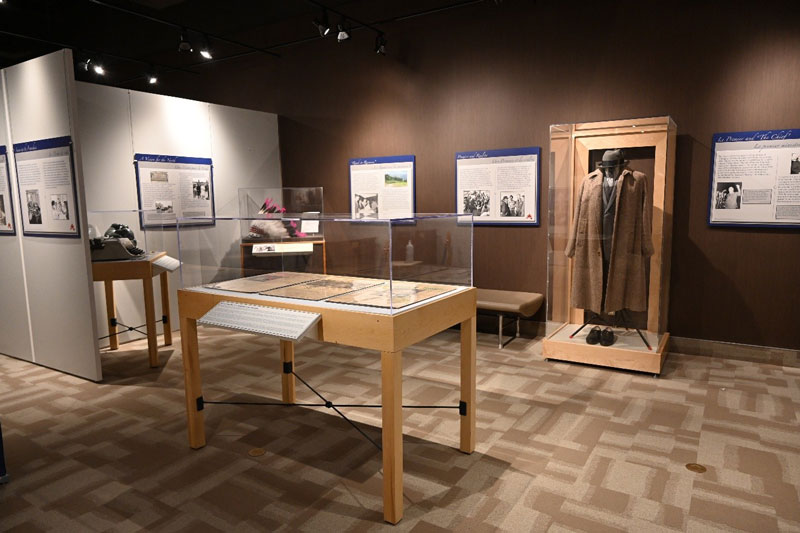
Before he passed, Diefenbaker created plans for a museum that would honour his legacy and care for his personal artefacts. On Sept. 20, 1975, Diefenbaker himself turned the sod, marking the construction of the Diefenbaker Canada Centre (DCC); five years later, about one year after his death, the building was completed. Today, the DCC showcases the permanent One Canada exhibit, which displays part of Diefenbaker’s collection. The DCC also stores and maintains Diefenbaker’s collection, which is available for public viewing online at SaskCollections or in person upon request. The DCC fosters a welcoming and inclusive environment where visitors can experience themes of citizenship, leadership, and Canada’s role in the international community.
3. Diefenbaker attended a one-room schoolhouse similar to the Little Stone Schoolhouse on the USask campus.
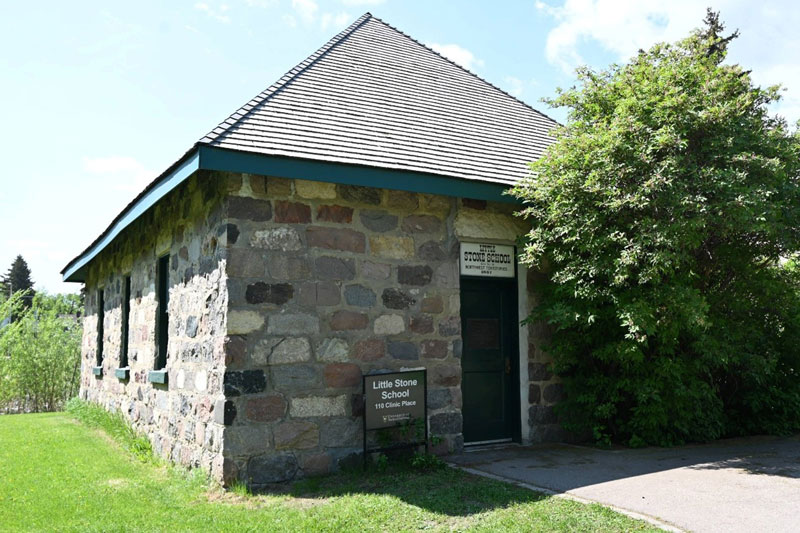
Between 1903 and 1905, Diefenbaker attended Tiefengrund School (located in school district No.431, halfway between Laird and Carlton, Sask.) while his father was employed as the teacher. Tiefengrund was a one-room schoolhouse similar to USask’s Little Stone Schoolhouse (LSS). The one-room LSS, now located behind the Health Sciences Building on the USask Saskatoon campus, was the first school built in Saskatoon in 1883. The LSS was originally located on Broadway Avenue, where École Victoria School now resides. In 1911, the LSS was moved to USask by the Daughters of the Empire to preserve the school and commemorate the coronation of King George V. Open houses and education programs at the Little Stone Schoolhouse foster an interactive learning environment where participants learn about one-room schoolhouses that existed on the prairies between 1883 and 1911.
4. Diefenbaker’s name can be found on the First World War Memorial Honour Roll Ribbons in the Peter MacKinnon Building.
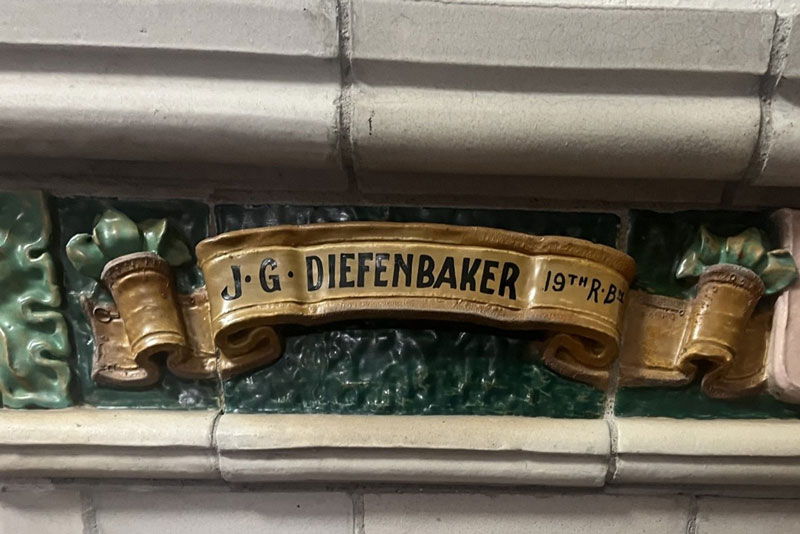
The First World War Honour Roll Ribbons in the Peter MacKinnon Building were created to honour USask students, staff, and faculty who enlisted in the war. In 1916, after completing the requirements and thesis for a Master of Arts degree in economics and political science, Diefenbaker enlisted in the 196th Battalion—graduating from USask that same May in absentia. Although he longed to fight for his country, Diefenbaker never saw combat. As detailed in his memoirs, while training in England, Diefenbaker was digging a trench when a fellow soldier threw a shovel, accidentally hitting him on the back. After recovering, Diefenbaker attempted to re-enlist multiple times but was rejected due to his injury. Both Diefenbaker and his brother, Elmer, can be found on the memorial ribbons.
5. Diefenbaker was the first person to obtain three degrees from USask.
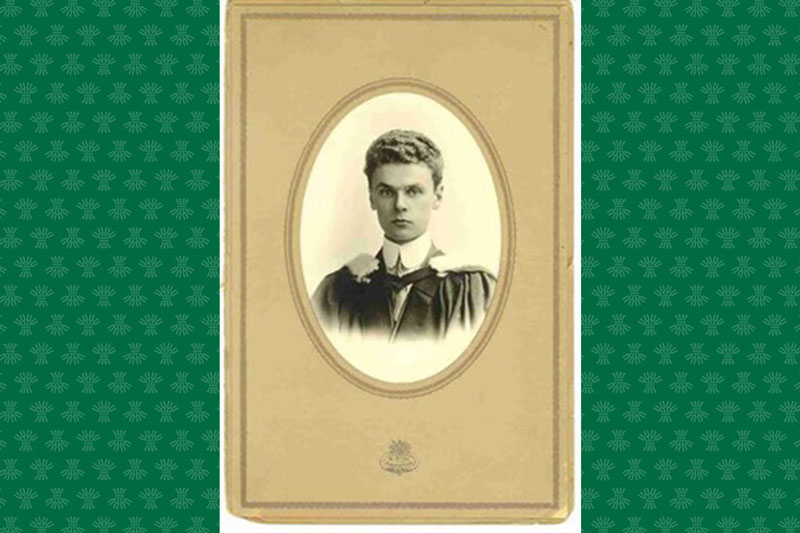
Diefenbaker received his first USask degree, a Bachelor of Arts, in 1915. His Master of Arts degree in economics and political science followed in 1916, which he received in absentia after enlisting in the First World War. After returning from the war, Diefenbaker received his law degree in 1919, making him the first person to obtain three degrees from the University of Saskatchewan. After establishing himself as an influential political figure, Diefenbaker received an astounding 21 honourary Doctor of Law degrees. USask honoured him with a Doctor of Civil Law degree in 1958. Due to his political success and long-lasting connection to the university, in 1969 Diefenbaker was chosen to serve as chancellor of USask, where he served four terms spanning the last 10 years of his life.