


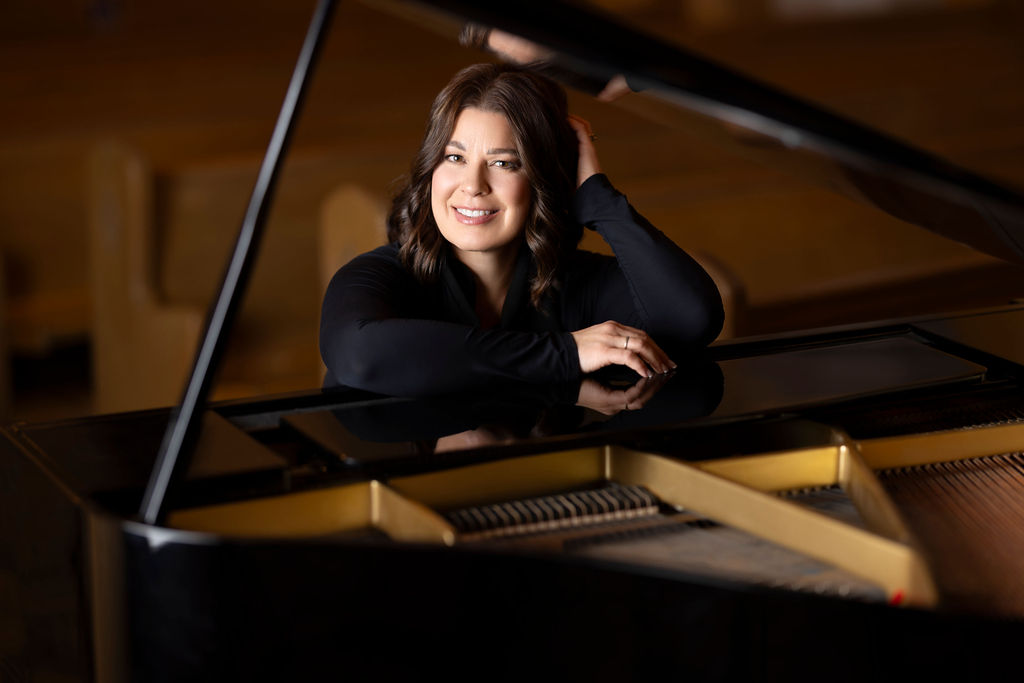
‘Your music career is built one note at a time’
USask graduate Dr. Maxine Thévenot (BMusEd’91), one of North America’s premier organists, is set to conduct a large orchestra and chorus of 150 voices at Carnegie Hall
By SHANNON BOKLASCHUKUniversity of Saskatchewan (USask) graduate Dr. Maxine Thévenot (BMusEd’91) will experience “the honour of a lifetime” when she conducts at Carnegie Hall in New York City in 2026.
Thévenot, an organist, conductor, and composer who earned her Bachelor of Music in Music Education degree (with distinction) at USask’s College of Arts and Science in 1991, will conduct the full orchestral version of French composer Maurice Duruflé’s Requiem, Opus 9, on June 28, 2026.

“I am thrilled to conduct a large orchestra and chorus of 150 voices at Carnegie Hall. I hope the audience will leave inspired and moved by the power and beauty of the music,” Thévenot said.
“I am especially grateful for the strong foundation in music education that the University of Saskatchewan’s Department of Music provided, which has shaped every step of my journey to this moment.”
Thévenot, who is currently based in Albuquerque, New Mexico, was born in Zenon Park, a francophone village in eastern Saskatchewan. She later moved to Lake Lenore where, at the age of four, she began her first piano lessons. Following her studies at USask, Thévenot earned her Master of Music and Doctor of Musical Arts degrees from the Manhattan School of Music in New York City. She was twice awarded the Bronson Ragan Award at the Manhattan School of Music for outstanding ability in organ performance.
The Green&White recently asked Thévenot about her inspiring career in music and her upcoming opportunity to conduct at Carnegie Hall.
You have been invited to conduct a large orchestra and chorus of 150 singers at Carnegie Hall in New York City on June 28, 2026. How did it feel to receive this great news?
When I received the news of the possibility, I was equally overcome with joy and disbelief. Then, when I received the email from Mid-America Productions asking me to select a date for my performance and a specific work to conduct, I knew that this was now turning into something very real! I have previously performed at Carnegie Hall on a digital organ (Carnegie Hall does not have a real pipe organ) with brass ensembles for university graduation ceremonies, so the world-famous space is not completely foreign to me. This past spring, I also decided that I wanted to experience a choir and orchestra concert from the perspective of a choral singer on stage. I was invited to join a large chorus to sing under the direction of Sir John Rutter, which was a most thrilling musical experience. This latter opportunity has mentally prepared me for the experience I will have next year in June. The thought of standing on the Carnegie Hall stage, leading a full orchestra and 150 singers, is, for now, a dream that will come true. It’s a thrilling and humbling opportunity, one that makes all the years of study, practice, and devotion to music feel profoundly meaningful.
You will be conducting the full orchestral version of French composer Maurice Duruflé’s Requiem, Opus 9. How would you describe this composition?
Maurice Duruflé’s Requiem, Op. 9, is one of the most radiant and spiritually profound works in the 20th-century sacred repertoire. Though it exists in more intimate versions, one with solo organ accompaniment and one for organ and chamber ensemble, the full orchestral setting expands its harmonic and colouristic palette, creating a luminous halo around the voices without ever overwhelming them. Rooted deeply in Gregorian chant, yet infused with the lush harmonic language of French Impressionism, every movement—from the solemn Introit and Kyrie, to the tender Pie Jesu, and the uplifting In Paradisum—balances serenity, emotional depth, and transcendence.
This music has held a deep personal significance for me for many years. In 1995, I had the privilege of playing the organ-accompanied version of this Requiem at the Royal Canadian College of Organists National Convention in Calgary. The following year, while travelling in Paris, I visited St. Étienne du Mont—the church where Maurice Duruflé and his wife, Marie-Madeleine, once served as organists. Just before the noon Mass, I found myself seated next to a distinguished lady with whom I struck up a conversation about my love of Duruflé’s music. To my astonishment, she was Mme Duruflé herself. Experiencing this music, both as a performer and meeting the person most closely connected to its creation, left an indelible impression on me—a connection that has stayed with me throughout my life.
Performing the full orchestral Requiem at Carnegie Hall is thus more than interpreting a masterwork; it is continuing a living connection to the composer, to the sacred tradition he and his wife embodied, and to the profound humanity and solace that this music offers. It is a work of reflection, of transcendence, and of enduring beauty—a gift from the past that continues to illuminate the present.
How will you prepare for the performance at Carnegie Hall?
I will prepare for the Carnegie Hall performance through a combination of careful score study, focused rehearsals, and personal reflection. There are several good books now available about Maurice Duruflé and his music, which I plan to read while on the beach in San Diego over the Christmas break. I plan to immerse myself in Duruflé’s full orchestral score, analyzing the interplay between choir and orchestra, and further study the work’s Gregorian chant roots. I will rehearse with the choir to ensure precise Latin diction, phrasing, and blend, then integrate the orchestra to achieve clarity, balance, and try to recreate the composer’s intent.
What do you enjoy about conducting?
I enjoy the magical combination of music, community, and storytelling. I love shaping a group of individual voices into a single, expressive sound, watching singers connect not only with the music but with one another. There’s something profoundly rewarding about guiding phrasing, dynamics, and tone so that the choir conveys the piece’s emotion and meaning to the audience. I also enjoy the interpretive aspect—studying a score deeply, exploring its historical and stylistic context, and then bringing it to life in a way that feels authentic and fresh. And there’s the joy of collaboration: working with instrumentalists, choir, and soloists to create a rich, layered performance. Ultimately, it’s about creating an experience that touches both the singers and the listeners, and that sense of shared musical expression is deeply fulfilling. I love serving as a guest conductor. I love the freedom that choral conducting affords me, and with a great choir and orchestra, one can convey tremendous emotion and move an audience profoundly.
You earned your Bachelor of Music in Music Education degree (with distinction) at USask in 1991. What inspired you to pursue this degree?
I was inspired to pursue a Bachelor of Music in Music Education because, from a very young age, I’ve felt a deep connection to music and its ability to bring people together. Since childhood, I was drawn not only to performing but also to the idea of helping others discover their own musical voice. Studying music education felt like the perfect path, as it allowed me to develop my skills while preparing for a career centered on creativity and community.
Why did you choose to study at USask?
I chose to study at the University of Saskatchewan because of its strong academic reputation, supportive community, and the opportunity to learn in an environment known for both excellence and approachability. The Department of Music had excellent piano teachers whom I was keen on studying with, and their Bachelor of Music in Music Education program was turning out professionals who were guaranteed employment right out of their degree program. Although I didn’t end up pursuing a career as a classroom teacher at the elementary level, the skills I learned at USask have become very helpful over the years. I felt that the university’s commitment to student success would provide the ideal place for me to grow personally and academically.
How did your time as a USask student help to shape your career in music?
My time as a USask student shaped my career in music by providing a strong technical foundation, invaluable mentorship, and early hands-on experience that built my confidence as both a performer and educator. I was almost more of a student outside the classroom than inside. I found a wealth of opportunities within the larger musical community of Saskatoon, whether it was with the University Chorus, as their piano accompanist, or at St. John’s Cathedral, where I began my journey as a young professional in sacred music in the Anglican Choral tradition. The same faculty members who were teaching me in the classroom were equally involved in the larger Saskatoon musical community, and the opportunities to make music with dedicated faculty and peers within our interconnected community broadened my perspective and musicianship. It helped me understand the kind of artist and teacher I wanted to become. Those years gave me both the skills and the motivation to pursue music professionally.
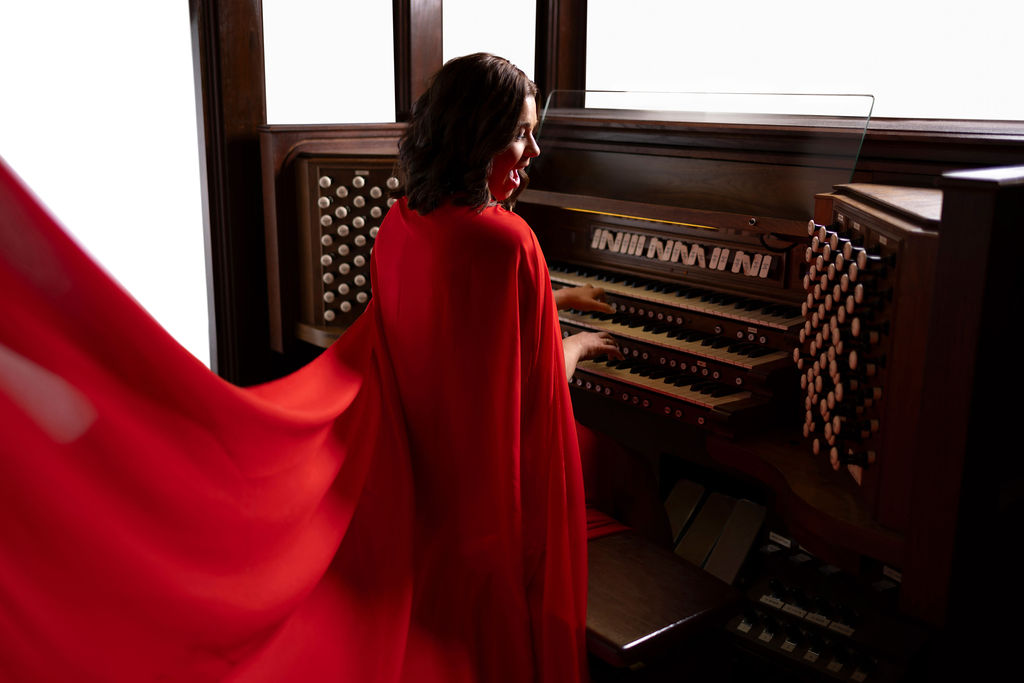
You are known as one of North America’s premier organists. What do you enjoy about the organ?
One of the things I enjoy most about the pipe organ is that it invites me into extraordinary experiences. The instrument itself is endlessly fascinating and unique to each acoustical space: its colours, scale, and expressive possibilities feel almost limitless. But I also love that being an organist has allowed me to travel globally and to spend time in some of the world’s most remarkable architectural and sacred spaces, often entirely by myself. There’s something magical about unlocking a cathedral in the early morning or late at night—quite literally holding the “keys to the kingdom”—and filling that vast, resonant space with the organ’s sound. It’s a privilege I never take for granted.
What advice do you have for current USask students and recent alumni who would like to pursue a music career?
Master your craft: practice smart, seek feedback, and never stop refining your skills.
Perform often: every stage, recital, or community gig is a stepping stone.
Network: connect with professors, alumni, and the local music scene—relationships open doors.
Diversify: teach, learn tech, or explore different genres—versatility is key.
Be resilient: rejection and failure happen; persistence is what separates dreamers from professionals.
Keep learning: seek new opportunities, festivals, or advanced study to grow continuously.
Bottom line: work hard, play boldly, and stay curious, because your music career is built one note at a time.