


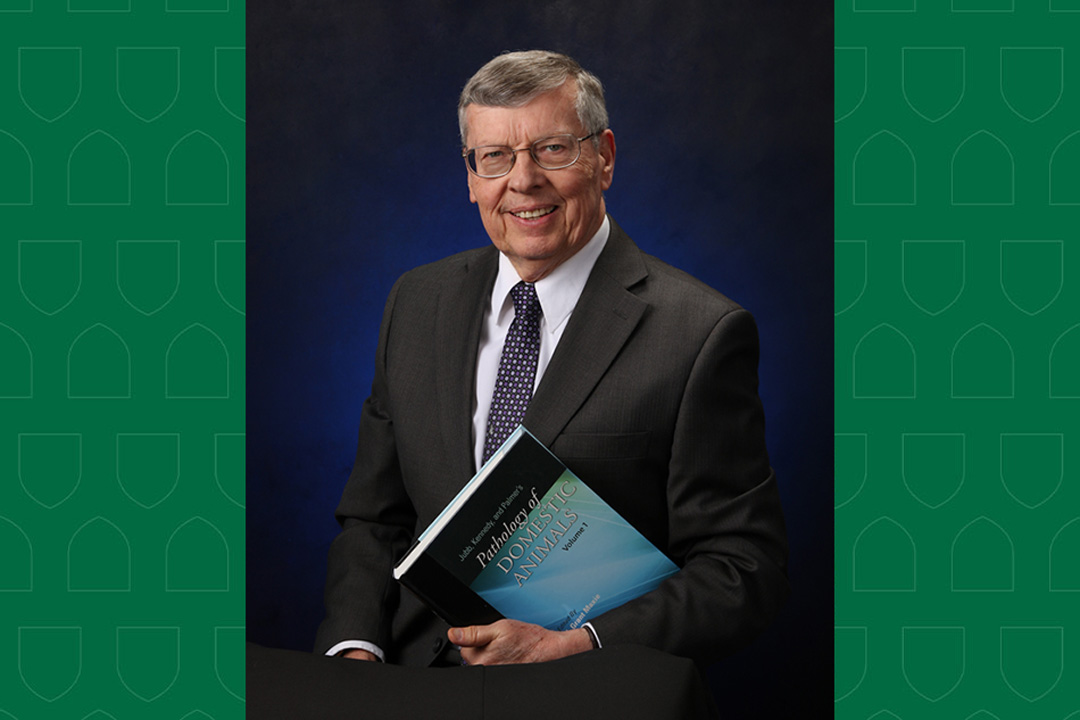
A rewarding career in veterinary pathology
USask graduate Dr. M. Grant Maxie (DVM’69, PhD), who was a student in the Western College of Veterinary Medicine’s first class, is the editor of an influential textbook
By SHANNON BOKLASCHUKAward-winning veterinary pathologist Dr. M. Grant Maxie (DVM’69, PhD) has seen his career come full circle.
In the late 1960s, as a young student in the Western College of Veterinary Medicine (WCVM) at the University of Saskatchewan (USask), Maxie studied the first edition of Jubb and Kennedy’s Pathology of Domestic Animals, an influential veterinary pathology textbook.
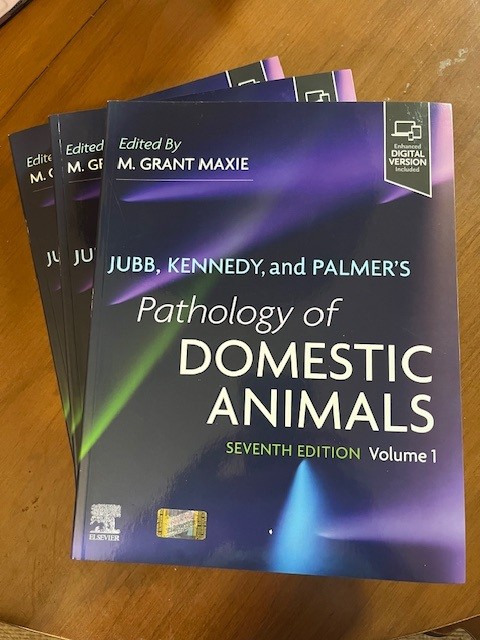
Today, nearly 60 years after becoming a veterinarian, Maxie is the editor of the seventh edition of the book. Now titled Jubb, Kennedy, and Palmer's Pathology of Domestic Animals, due to the involvement of Dr. Nigel Palmer, the latest edition was released in three volumes by Elsevier Health Sciences in October 2025.
“JK&P is the most comprehensive reference book published on the topic of pathology of the common domestic mammals, with emphasis on disease conditions of cattle and small ruminants, swine, horses, dogs, cats, and camelids,” said Maxie, who also edited the fifth edition of the textbook in 2007 and the sixth edition in 2016, as well as co-authored chapters in the third through seventh editions.
Maxie recalls studying the first edition of the textbook as an undergraduate student and noted “it’s advanced a lot since then.” However, even with decades of experience in pathology, Maxie never imagined that he would one day edit the textbook he used as an undergraduate, recalling “it was daunting” to read it then due to the significant amount of information contained in its pages.
“It was just a huge tome and really difficult to manage,” he said.
Many changes have since been made to the textbook over the years, such as moving toward including more colour photos, rather than black and white, and offering the material both online and in print, he said.
“We’ve made a lot of improvements to the book over time, and it’s still widely used and one of the big uses is for board certification—becoming certified as a pathologist by ACVP, the American College of Veterinary Pathologists,” said Maxie, noting the textbook is also a “prime source of information” for graduate students and veterinary residents.
“It’s an everyday use kind of a textbook that doesn’t just sit on shelves, and it’s part of your training. If you’re going to be a pathologist, well, you better know what’s in that book.”
Maxie became involved in the project because of his ongoing role as an editor and because of his extensive experience as a veterinary pathologist working in Ontario. Born and raised in southern Alberta, Maxie was originally inspired to pursue a career in pathology because of influential people like Dr. D.L.T. (Larry) Smith, the WCVM’s first dean. Smith, who advocated for advanced veterinary education and research, was one of the first veterinary academics in Canada to obtain a PhD degree and was also the first Canadian to be board-certified in a specialty (pathology).
As an undergraduate student at the WCVM, Maxie also had the opportunity to work for a summer for Dr. Harley Moon, a highly regarded researcher of comparative microbiology and pathology of intestinal diseases.
“So, I had a lot of pathology influence there and never imagined, of course, that I would follow in their footsteps,” said Maxie. “But I was attracted to it, and you do more and more, and you become board certified and it’s your life. I mean, that’s what I did. I was a pathologist for 50 years, so I quite enjoyed it.”
After graduating with his Doctor of Veterinary Medicine degree at USask in 1969, Maxie completed an internship in small animal medicine and earned a PhD in clinical pathology at the Ontario Veterinary College (OVC) at the University of Guelph in 1973. In 1975, Maxie married his wife, veterinary neurologist Dr. Laura Smith-Maxie, in Kenya. The couple went on to raise two children, Kevin and Andrea, and currently live in Puslinch, Ont.
Following three years of work as a hematologist within the International Development Research Center project in Kenya on trypanosomiasis (sleeping sickness of cattle) and theileriosis (East coast fever) in the 1970s, Maxie joined the faculty at the OVC as an anatomic pathologist, teaching cardiovascular and urinary pathology. After moving to the Veterinary Services Laboratory of the Ontario Ministry of Agriculture, Food and Rural Affairs (OMAFRA) in Guelph, Ont., in 1982, he became board-certified in anatomic pathology by the ACVP in 1984. Before retiring in 2019, Maxie was employed for 22 years at the University of Guelph, where he served as the director of the Animal Health Laboratory and as a co-executive director of the Laboratory Services Division.
Maxie has received numerous awards throughout his career, including the Distinguished Service Award from the American Association of Veterinary Laboratory Diagnosticians (AAVLD) earlier this fall and the Carl Block Award in 2016 from the National Farmed Animal Health and Welfare Council in Ottawa, Ont., for outstanding contributions in the field of livestock animal health.
Maxie has also had a longtime interest in scientific writing and publishing, and he is continuing this work in his retirement. He fondly remembers publishing his first journal article—a paper dating back to his postgraduate student days that stemmed from a requirement for veterinary interns to write a scientific peer-reviewed paper. As a result, the publication titled “Splenic torsion in three Great Danes,” by Maxie, Reed, Pennock, and Hoff, appeared in the Canadian Veterinary Journal in 1970.
“Publications are very much like your children, and you have an emotional investment in them, and you like to see them published and you never forget your first one,” Maxie said. “I’ve done a lot since then.”
That 1970 paper ultimately led to Maxie serving for five years as the editor-in-chief of the Canadian Veterinary Journal, from 1986 to 1991. He has continued to publish extensively since then and currently serves as the editor-in-chief of the Journal of Veterinary Diagnostic Investigation, a role he has held since 2014. He is also a past-president of the AAVLD.
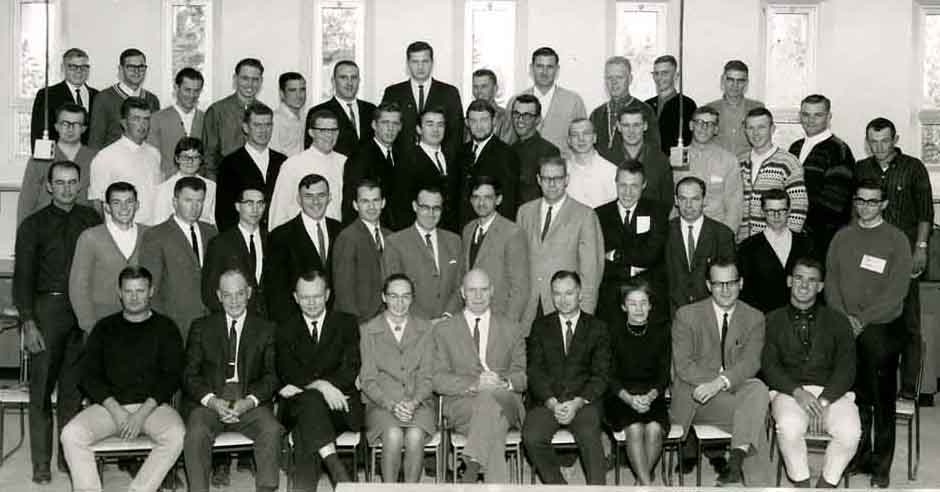
Maxie has enjoyed his years of service and dedication to the veterinary profession and remains connected to his alma mater. As a member of the WCVM’s first graduating class from 56 years ago, Maxie and other alumni recently met with current WCVM students to reflect on the evolution of veterinary education and clinical practice over the past half century. That general question served as the premise of “Vet med: then and now,” a unique panel discussion that was held during Vetavision—the WCVM’s student-organized public open house—in September 2024.
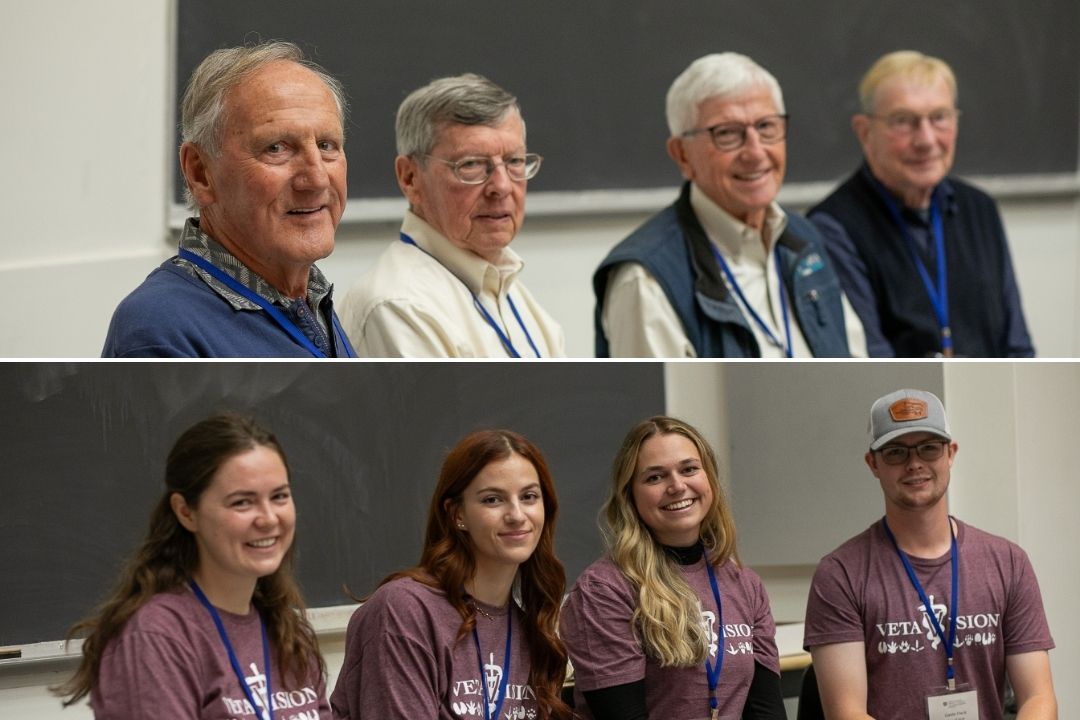
Dr. Gillian Muir (DVM’88, PhD), the college’s dean and a 1988 WCVM graduate, teamed up with third-year veterinary student Karlynn Dzik to moderate the 2024 discussion. Panelists included Maxie, Dr. Wayne Burwash (DVM’69), Dr. Ross Clark (DVM’69), and Dr. Ed Neufeld (BA’65, DVM’69) from the Class of 1969, along with four students from the future Class of 2026: Emerson Ferrier, Gavin Fleck, Ellen Marshall, and Annie Zehnder.
When asked about the diversity of education in the WCVM in 1969, Maxie shared that
“I think we had a very well-rounded education because we did get exposure to everything that came in the door; we basically did everything.”
“When we learned about bovine reproductive rectal palpation procedures, we all went down to Intercontinental Packers and palpated a couple hundred cows at 5 a.m. That’s just what we did,” he said during the panel discussion.
In an interview with the Green&White, Maxie said the education he and others received as WCVM students provided “the foundation for the rest of our lives.” He noted that he and his fellow graduates from the Class of 1969 remained in the veterinary profession throughout their careers and have found ways to continue to give back.
“Twenty-seven of us graduated and 27 of us kept doing veterinary work. So, I think it was good experience,” he said. “It turned out well for us, and I think it turned out well for society, too.”